VKC ScienceChemistry for written exams Telegram

UPSC Combined Geo-Scientist

Chemist

  • 2 objective papers
  • 120 questions each
  • 2 h per paper
  • 100 + 300 marks

Prelims Paper II covers chemistry.

UPSC Combined Geo-Scientist, Prelims · 2025 · Paper II, Chemistry

UPSC Geo-Scientist Prelims 2025 Chemistry (Paper II): answer key and solutions

All 120 questions of the 2025 Combined Geo-Scientist Prelims Paper II (chemistry), each with the answer and a short explanation in the hint-sheet style: the key fact first, numericals worked with units. Tap a number in the key to jump to the question; every question also has its own page.

Take this paper offlineAll 120 questions with answers and explanations in one PDF.
Download PDFJoin Telegram

Answer key

Question paper: read or download the 2025 Paper II paper. Solutions are original work by VKC; question paper belongs to UPSC.

Q1Atomic structure / wave functions

Which one of the following statements regarding hydrogen atom and other one electron species is correct ?

  1. (a) For H-atom, s orbital is dependent on the radial wave function (r) only and independent of the angular wave function (θ and ϕ).
  2. (b) For H-atom, s orbital is dependent on both the radial wave function (r) and the angular wave function (θ and ϕ).
  3. (c) For H-atom, there is no such dependence observed for s orbital; rather, the dependence starts with involvement of p orbital.
  4. (d) For H-atom, s orbital is dependent on the angular wave function (θ and ϕ) only and independent of the radial wave function (r).

Answer: (a) For H-atom, s orbital is dependent on the radial wave function (r) only and independent of the angular wave function (θ and ϕ).

ψ = R(r)·Y(θ,ϕ). For l = 0, Y₀₀ = 1/√(4π), a constant. So an s orbital depends on r only; it is spherically symmetric. Angular dependence appears from p orbitals (l = 1) onwards. → (a)

Part of VKC Basic

Read every answer and explanation of this paper with VKC Basic

VKC Basic (₹999 for 6 months) opens every solved answer, the notes, the handbook and the daily answer archive. Every Mains test series includes it.

See what is included Already a member? Sign in

Q2Atomic structure / penetration and shielding

The correct order of penetrating ability of atomic orbitals is :

  1. (a) 4s > 4p > 4d > 4f
  2. (b) 4f > 4d > 4p > 4s
  3. (c) 4p > 4s > 4d > 4f
  4. (d) 4d > 4p > 4s > 4f

Answer and explanation with the VKC plan

Q3Electronic configuration / d-block

The correct electronic configuration of Platinum is :

  1. (a) [Xe] 4f¹⁴ 5d¹⁰ 6s⁰
  2. (b) [Xe] 4f¹⁴ 5d⁹ 6s¹
  3. (c) [Xe] 4f¹⁴ 5d⁸ 6s²
  4. (d) [Xe] 4f¹³ 5d¹⁰ 6s¹

Answer and explanation with the VKC plan

Q5Periodic table / electronic configuration

An element forms an ion in the +IV oxidation state with electronic configuration : [Xe] 4f¹⁴ 5d¹⁰. Which group and period of the Modern Periodic Table does the element belong to ?

  1. (a) p-block element from Period – 6 and Group – 14
  2. (b) d-block element from Period – 6 and Group – 10
  3. (c) p-block element from Period – 5 and Group – 13
  4. (d) d-block element from Period – 5 and Group – 12

Answer and explanation with the VKC plan

Q6d-block / oxidation states

The metallic elements of this group of the periodic table show the highest oxidation state of (+VI) at the bottom of the group and a stable oxidation state of (+III) at the top of the group. The group to which the elements belong in the Modern Periodic Table is :

  1. (a) Group 16
  2. (b) Group 15
  3. (c) Group 6
  4. (d) Group 13

Answer and explanation with the VKC plan

Q7HSAB principle

The S²⁻ ions prefer to bind to the :

  1. (a) Alkali metal ions
  2. (b) Alkaline earth ions
  3. (c) Lighter transition metal ions in high oxidation states
  4. (d) Heavier transition metal ions in low oxidation states

Answer and explanation with the VKC plan

Q8Ionic radii

Which of the following statements are correct ?

  1. The ionic radii of a metal ion in a given oxidation state are always a constant.
  2. If a metal can form cations of different oxidation states, then for a given coordination number its ionic radius increases with increasing oxidation state.
  3. If a metal can form cations of different oxidation states, then for a given coordination number its ionic radius decreases with increasing oxidation state.
  4. The ionic radii of a metal ion in a given oxidation state increase with an increase in coordination number.

Select the answer using the code given below :

  1. (a) 1 and 2
  2. (b) 2 and 4
  3. (c) 3 and 4
  4. (d) 1 and 3

Answer and explanation with the VKC plan

Q11Periodic properties / electron gain enthalpy

Which one of the following represents the correct order of electron gain enthalpy of halogen atoms ?

  1. (a) F > Cl > Br > I
  2. (b) I > Br > Cl > F
  3. (c) I > Cl > Br > F
  4. (d) Cl > F > Br > I

Answer and explanation with the VKC plan

Q13Electrochemistry / redox potentials

The redox chemistry of silver is given by the following equations :

  1. Ag⁺(aq) + e⁻ → Ag(s) E° = + 0.80
  2. Ag²⁺(aq) + e⁻ → Ag⁺(aq) E° = + 1.98

Which of the following statements are not correct with respect to above equations ?
Statement (I) : Reaction 1 is thermodynamically more feasible than reaction 2.
Statement (II) : Ag⁺ is a good oxidizing agent.
Statement (III) : Reaction 2 is thermodynamically more feasible than reaction 1.
Statement (IV) : Ag⁺ is a good reducing agent.
Select the answer using the code given below :

  1. (a) Statement (III) and (IV)
  2. (b) Statement (I) and (II)
  3. (c) Statement (II) and (III)
  4. (d) Statement (I) and (IV)

Answer and explanation with the VKC plan

Q16p-block / boric acid

Which one of the following statements regarding B(OH)₃ is correct ?

  1. (a) It is a hydroxide and a strong Brønsted base.
  2. (b) It is a tribasic acid.
  3. (c) It is a weak Lewis acid.
  4. (d) It is a strong Brønsted acid.

Answer and explanation with the VKC plan

Q17p-block / oxoacids of phosphorus

The correct order of reducing nature of the oxy acids is :

  1. (a) H₃PO₄ > H₃PO₃ > H₃PO₂
  2. (b) H₃PO₂ > H₃PO₃ > H₃PO₄
  3. (c) H₃PO₃ > H₃PO₄ > H₃PO₂
  4. (d) H₃PO₂ > H₃PO₄ > H₃PO₃

Answer and explanation with the VKC plan

Q18Solid state / radius ratio

A salt with the stoichiometry AB₂ where r(A⁴⁺) = 63 pm and r(B²⁻) = 140 pm adopts :

  1. (a) Rutile structure
  2. (b) Rock salt structure
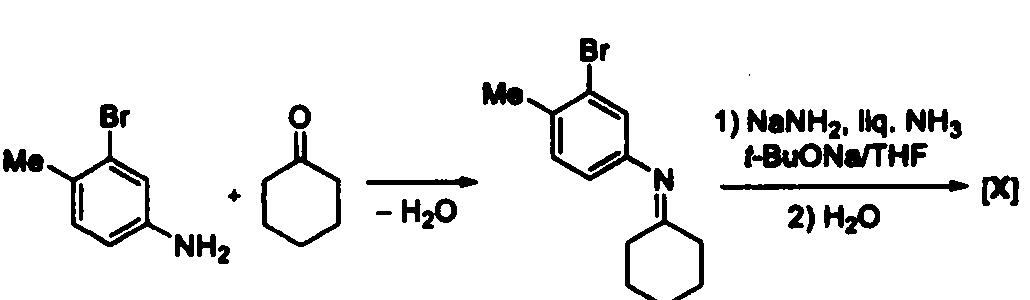
  3. (c) Fluorite structure
  4. (d) Zinc Blende

Answer and explanation with the VKC plan

Q19Solid state / ZnS structures

In ZnS crystal lattice, S²⁻ ions form two different close-packed arrays in which Zn²⁺ occupies tetrahedral holes. Two structures adopted by ZnS will be :

  1. (a) Zinc Blende (ccp), Wurtzrite (hcp)
  2. (b) Zinc Blende (ccp), Wurtzrite (bcc)
  3. (c) Zinc Blende (bcc), Wurtzrite (hcp)
  4. (d) Zinc Blende (ccp), Wurtzrite (fcc)

Answer and explanation with the VKC plan

Q20Chemical bonding / Fajans' rules

The cations A⁺ will form the most ionic halide and A³⁺ the most covalent halide with :

  1. (a) I⁻ and F⁻ respectively
  2. (b) F⁻ and I⁻ respectively
  3. (c) F⁻ and F⁻ respectively
  4. (d) I⁻ and I⁻ respectively

Answer and explanation with the VKC plan

Q21Solid state / controlled-valency semiconductors

Doping NiO with Li₂O in presence of air/O₂ increases the electrical conductivity due to :

  1. (a) Formation of F centres in the NiO lattice
  2. (b) Formation of a Schottky defect in the NiO lattice
  3. (c) Formation of excess holes in the NiO lattice
  4. (d) Formation of a Frenkel defect in the NiO lattice

Answer and explanation with the VKC plan

Q22Coordination chemistry / bonding theories

Which one of the following statements regarding ligand field theory is correct ?

  1. (a) It considers which atomic orbitals on the metal are used for bonding and predicts the shape and stability of the complex. However, it fails to explain electronic spectra and variation of magnetic properties with temperature.
  2. (b) It considers that bonding in coordination compounds is purely electrostatic in nature arising due to ion-ion or ion-dipole attractions which remarkably explains the electronic spectra and magnetism in transition metal complexes.
  3. (c) It provides some allowance for the possibility of some covalent interactions between the orbitals on the metal and ligand in form of σ overlap of orbitals, π overlap of orbitals or dπ – pπ bonding (back bonding) due to π overlap of full d orbitals on the metal and with empty p orbitals on the ligands.
  4. (d) It provides full allowance of both covalent and ionic contributions and much of the qualitative descriptions require symmetry and group theory approaches.

Answer and explanation with the VKC plan

Q23Chemical bonding / hybridisation

The hybridization of boron and oxygen atoms in boric acid (H₃BO₃) are respectively :

  1. (a) sp³ and sp²
  2. (b) sp³ and sp³
  3. (c) sp² and sp²
  4. (d) sp² and sp³

Answer and explanation with the VKC plan

Q25Coordination chemistry / VBT and magnetism

Which one of the following statements is not correct with respect to geometry and magnetism of the given complexes ?

  1. (a) [Ni(CN)₄]²⁻ is square planar and diamagnetic.
  2. (b) [Ni(Cl)₄]²⁻ is tetrahedral and paramagnetic.
  3. (c) [Fe(CN)₆]⁴⁻ is octahedral and diamagnetic.
  4. (d) Ni(CO)₄ is tetrahedral and paramagnetic.

Answer and explanation with the VKC plan

Q26Coordination chemistry / chelate effect

Consider the following 3-step reaction :
[Ni(H₂O)₆]²⁺ + en ⟶ [Ni(en)(H₂O)₄]²⁺ + 2H₂O
[Ni(en)(H₂O)₄]²⁺ + en ⟶ [Ni(en)₂(H₂O)₂]²⁺ + 2H₂O
[Ni(en)₂(H₂O)₆]²⁺ + en ⟶ [Ni(en)₃]²⁺ + 2H₂O

Which one of the following statements is correct for the overall balanced reaction of the above 3-step reaction ?

  1. (a) Number of molecules on product side will be greater than the number of molecules on the substrate side indicating increase in entropy with more chelation.
  2. (b) Number of molecules on product side will be less than the number of molecules on the substrate side indicating decrease in enthalpy with more chelation.
  3. (c) Number of molecules on product side equals the number of molecules on the substrate side indicating no change in enthalpy and chelation.
  4. (d) Number of molecules on product side will be greater than the number of molecules on the substrate side indicating increase in enthalpy with less chelation.

Answer and explanation with the VKC plan

Q27Coordination chemistry / IUPAC nomenclature

The IUPAC name of [Pt(Py)₄][PtCl₄] is :

  1. (a) Tetrapyridineplatinum(I) tetrachloroplatinate(III)
  2. (b) Tetrapyridineplatinum(III) tetrachloroplatinate(III)
  3. (c) Tetrachloroplatinum(II) tetrapyridineplatinate(II)
  4. (d) Tetrapyridineplatinum(II) tetrachloroplatinate(II)

Answer and explanation with the VKC plan

Q28Coordination chemistry / geometrical isomerism

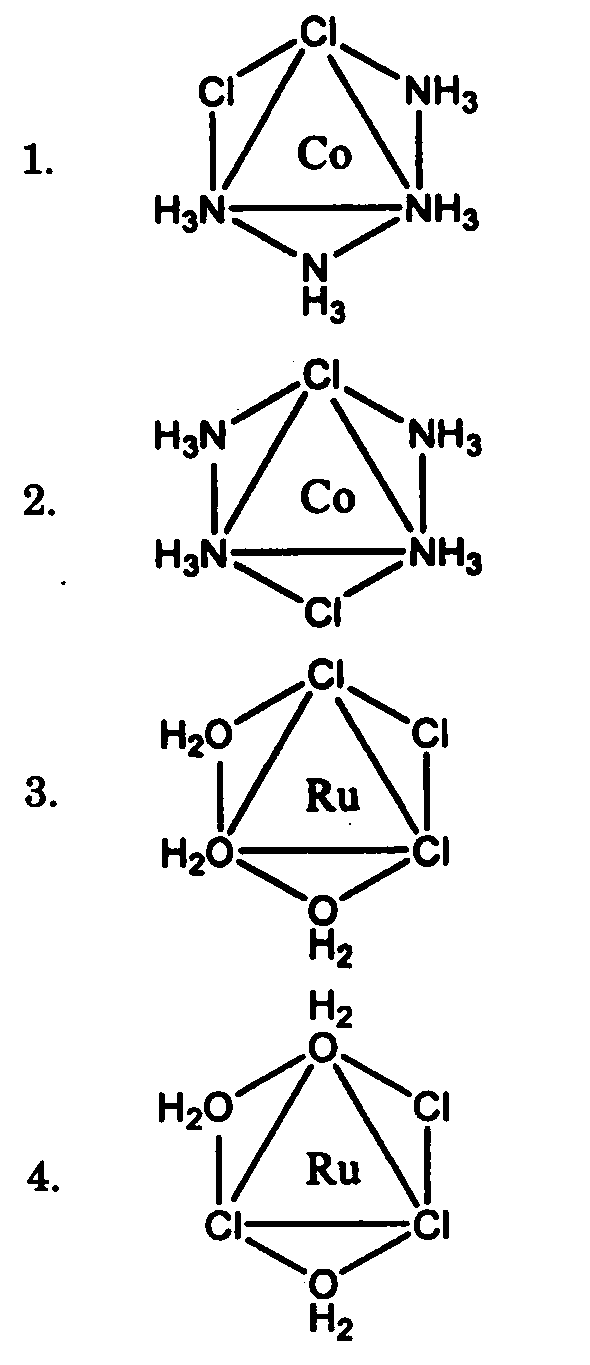
Consider the following structures :

  1. [Co] with Cl, Cl, NH₃, NH₃, NH₃, NH₃; the two Cl on adjacent vertices (structure 1)
  2. [Co] with Cl, Cl, NH₃, NH₃, NH₃, NH₃; the two Cl on opposite vertices (structure 2)
  3. [Ru] with Cl, Cl, Cl, H₂O, H₂O, H₂O; the three Cl on one face, each opposite an H₂O (structure 3)
  4. [Ru] with Cl, Cl, Cl, H₂O, H₂O, H₂O; two Cl opposite each other, all three Cl in one plane (structure 4)
UPSC Combined Geo-Scientist Prelims 2025 Paper II (Chemistry), Q28: figure printed with the question

Which one of the following statements is correct for the structures given above ?

  1. (a) 1 and 2 are cis and trans tetraamminedichlorocobalt(III) and 3 and 4 are cis and trans triaquatrichlororuthenium(III) isomeric pairs.
  2. (b) 1 and 2 are cis and trans tetraamminedichlorocobalt(III) and 3 and 4 are fac and mer triaquatrichlororuthenium(III) isomeric pairs.
  3. (c) 1 and 2 are fac and mer tetraamminedichlorocobalt(III) and 3 and 4 are cis and trans triaquatrichlororuthenium(III) isomeric pairs.
  4. (d) 1 and 2 are fac and mer tetraamminedichlorocobalt(III) and 3 and 4 are fac and mer triaquatrichlororuthenium(III) isomeric pairs.

Answer and explanation with the VKC plan

Q29Coordination chemistry / isomerism

Which one of the following statements is true for geometrical and optical isomers for a [Ma₂b₂c₂] complex, where a, b and c are monodentate ligands ?

  1. (a) Six geometrical isomers and all are optically active.
  2. (b) Five geometrical isomers among which, one is optically active.
  3. (c) Four geometrical isomers among which, two are optically active.
  4. (d) Three geometrical isomers and all are optically active.

Answer and explanation with the VKC plan

Q30Ionic equilibrium / buffers

Which one of the following will not make an acidic buffer solution ?

  1. (a) 100 mL 0.1 N CH₃COOH (aq) + 25 mL 0.4 N NaOH (aq)
  2. (b) 100 mL 0.1 N CH₃COOH (aq) + 25 mL 0.3 N NaOH (aq)
  3. (c) 100 mL 0.1 N CH₃COOH (aq) + 25 mL 0.2 N NaOH (aq)
  4. (d) 100 mL 0.1 N CH₃COOH (aq) + 25 mL 0.1 N NaOH (aq)

Answer and explanation with the VKC plan

Q31Acids and bases / steric effects on basicity

In trialkyl amines, the ‘p-character’ of lone-pair of electrons on the N-atom :

  1. (a) Increases with bulkier alkyl group resulting in superior donation of lone-pair towards an acid
  2. (b) Decreases with bulkier alkyl group resulting in superior donation of lone-pair towards an acid
  3. (c) Increases with bulkier alkyl group resulting in poor donation of lone-pair towards an acid
  4. (d) Decreases with bulkier alkyl group resulting in poor donation of lone-pair towards an acid

Answer and explanation with the VKC plan

Q32Electrochemistry / Ostwald's dilution law

Which one of the following statements regarding Ostwald’s Law of Dilution is not correct ?

  1. (a) It is only applicable to weak electrolytes at equilibrium where the dissociation constant K, can be related to degree of ionization (α) and concentration c (in m/L) as K = α² c (1 – α).
  2. (b) It is only valid for dilute solutions, where the concentration of the electrolyte is very low.
  3. (c) It is applicable to strong as well as weak electrolytes at extreme dilution, if temperature of the solution remains constant during the dilution process.
  4. (d) The electrolyte solution must behave ideally, which means that the interactions between the solvent and solute particles should be negligible.

Answer and explanation with the VKC plan

Q33Ionic equilibrium / ionic product of water

What happens to the ionic product (K_w = 1.0 × 10⁻¹⁴) of water (1 L) at 25°C when it is added with 1 mL of 0.1 N HCl followed by 1 mL of 0.1 N NaOH ?

  1. (a) Ionic product remains constant without any significant change
  2. (b) Ionic product first increases with addition of HCl due to increase in H⁺ and then decreases on addition of NaOH due to addition of same amount of OH⁻ to its original value
  3. (c) Ionic product increases on addition of HCl [H⁺] and further increases due to addition of NaOH [OH⁻] as both factors are involved in the ionic product as K_w = [H⁺] [OH⁻]
  4. (d) Ionic product of water decreases constantly as the ionization of water will decrease constantly on addition of any external electrolyte irrespective of being an acid or a base

Answer and explanation with the VKC plan

Q34Ionic equilibrium / pH and temperature

Which one of the following concentrations of H⁺ ions indicate an acidic pH of water at 100°C ? (where K_w at 100°C is 5.5 × 10⁻¹³)

  1. (a) [H⁺] = 7.3 × 10⁻⁷
  2. (b) [H⁺] = 7.4 × 10⁻⁷
  3. (c) [H⁺] = 7.5 × 10⁻⁷
  4. (d) [H⁺] = 7.0 × 10⁻⁷

Answer and explanation with the VKC plan

Q35Ionic equilibrium / buffer pH

What will be the pH of the solution produced by adding 20 mL of 1 M HCl to 1 L of a solution containing 0.1 M acetic acid and 0.1 M sodium acetate (K_a = 1.75 × 10⁻⁵ mol L⁻¹) ? (where, log 1.75 = 0.24; log 2/3 = – 0.176)

  1. (a) 4.58
  2. (b) 4.93
  3. (c) 4.76
  4. (d) 5.06

Answer and explanation with the VKC plan

Q36Ionic equilibrium / buffers

A basic buffer solution is formed by mixing aqueous solutions of :

  1. (a) A weak base and its salt
  2. (b) A strong base and its salt
  3. (c) A weak acid and its salt
  4. (d) A strong acid and a strong base

Answer and explanation with the VKC plan

Q37Volumetric analysis / iodometry

In quantitative volumetric analysis for the iodometric determination of copper, what will be the required amount of CuSO₄.5H₂O for preparing 100 mL of N/40 standard solution ?
Reactions involved are :
2Cu²⁺ + 4I⁻ ⟶ 2CuI + I₂
I₂ + 2S₂O₃²⁻ ⟶ S₄O₆²⁻ + 2I⁻
(Molecular weight of CuSO₄.5H₂O is 159.60 g/mol.)

  1. (a) 0.19 g
  2. (b) 0.29 g
  3. (c) 0.39 g
  4. (d) 0.49 g

Answer and explanation with the VKC plan

Q38Volumetric analysis / primary standards

Consider the following characteristics for a primary standard substance :

  1. The substance has high formula weight.
  2. The substance is 100% pure with very less impurity of only 0.01 to 0.02%.
  3. The substance is stable indefinitely at room temperatures.
  4. The substance is involved in a reaction for which equilibrium is far right to obtain a very sharp end point.

The above statements are correct for which one of the following pair of substances ?

  1. (a) Na₂CO₃ and NaOH
  2. (b) C₂H₂O₄ and KMnO₄
  3. (c) C₂H₂O₄ and K₂Cr₂O₇
  4. (d) KHC₈H₄O₄ and H₂SO₄

Answer and explanation with the VKC plan

Q39Volumetric analysis / complexometric titration

In order to determine the amount of Ca²⁺ through complexometric titration with EDTA using Eriochrome black T, which one of the following may be adapted to obtain a sharp end point ?

  1. (a) A sufficiently large amount of free Mg²⁺ should be added to Ca²⁺ solution
  2. (b) A small measured amount of free Mg²⁺ should be added to Ca²⁺ solution
  3. (c) Addition of Mg²⁺ is not at all required as it will hinder with the formation of Ca-EDTA complex by making Mg-EDTA complex
  4. (d) Both (a) and (b) are correct as Mg²⁺ is required to initiate the complexation reaction failing which EDTA remains unreacted

Answer and explanation with the VKC plan

Q40Ionic equilibrium / indicators

Consider an acid-base indicator (HIn) as a weak acid which exhibits red colour in non-ionized form and blue colour in ionized form :
HIn ⇌ H⁺ + In⁻
(red) (blue)
What is the general transition range in terms of pH units between the colours of an indicator according to the equation pH = pK_In + log [In⁻]/[HIn], provided that your eyes discern one colour only when it is 10 times as intense as the other ?

  1. (a) 1
  2. (b) 2
  3. (c) 3
  4. (d) 4

Answer and explanation with the VKC plan

Q41Gaseous state / kinetic theory

Consider the following statements regarding gas molecules :
Statement 1 : Heavier gas molecules move more slowly than light gas molecules.
Statement 2 : The average kinetic energy of gas molecules is independent of the mass.

Which one of the following is correct in respect of above statements ?

  1. (a) Both statement 1 and statement 2 are true and statement 2 is the correct explanation of statement 1.
  2. (b) Both statement 1 and statement 2 are true but statement 2 is not the correct explanation of statement 1.
  3. (c) Statement 1 is true but statement 2 is false.
  4. (d) Statement 1 is false but statement 2 is true.

Answer and explanation with the VKC plan

Q42Gaseous state / ideal gas equation

The volume occupied by 8.8 g of CO₂ at 32°C and 1 bar pressure is : (where R = 0.083 bar dm³ K⁻¹ mol⁻¹; atomic weight of C = 12, O = 16)

  1. (a) 8.02 dm³
  2. (b) 5.06 dm³
  3. (c) 6.15 dm³
  4. (d) 10.2 dm³

Answer and explanation with the VKC plan

Q44Gaseous state / kinetic theory

Which one of the following is not a fundamental assumption about the structure of gases in the kinetic theory of gases model ?

  1. (a) A gas is composed of a very large number of minute particles (atoms/molecules)
  2. (b) In the absence of a force field, these particles move in a straight line
  3. (c) These particles interact (collide) with one another only infrequently
  4. (d) In any collision, the total kinetic energy of the two molecules may change after the collision

Answer and explanation with the VKC plan

Q45Gaseous state / Maxwell distribution

Consider the following statements regarding the distribution of speeds of molecules :

  1. The zero value of the first derivative of \(\left(\frac{1}{N}\right)\left(\frac{dN_u}{du}\right)\) w.r.t. speed corresponds to the most probable speed u_mp.
  2. At the same temperature, the oxygen molecule has a narrower distribution of speeds than the carbon dioxide molecule.
  3. The area under the speed distribution curve of a particular gas at two different temperatures is the same.

Which of the statement(s) given above is/are correct ?

  1. (a) 1 and 2
  2. (b) 2 and 3
  3. (c) 1 and 3
  4. (d) 2 only

Answer and explanation with the VKC plan

Q47Gaseous state / molecular speeds

For any given molecule, the ratio of the average speed ( ū ), root mean square speed (u_rms) and most probable speed (u_mp) is respectively :

  1. (a) 1.60 : 1.73 : 1.41
  2. (b) 1.60 : 1.41 : 1.73
  3. (c) 1.41 : 1.73 : 1.60
  4. (d) 1.73 : 1.60 : 1.41

Answer and explanation with the VKC plan

Q48Gaseous state / collision frequency

According to Gay-Lussac’s law, which one of the following relations for the frequency (Z₁₁) of binary collisions of gas molecules at constant volume is correct ?

  1. (a) Z₁₁ ∝ T^{1/2} and Z₁₁ ∝ p^{1/2}
  2. (b) Z₁₁ ∝ T and Z₁₁ ∝ p^{1/2}
  3. (c) Z₁₁ ∝ T² and Z₁₁ ∝ p
  4. (d) Z₁₁ ∝ T² and Z₁₁ ∝ p²

Answer and explanation with the VKC plan

Q49Gaseous state / ideal gas

Which one of the following statements is not correct ?

  1. (a) In a gas mixture, each gas contributes to the total pressure.
  2. (b) These are large intermolecular forces in an ideal gas.
  3. (c) The volume of the gas is essentially the volume of the container.
  4. (d) The pressure of the gas is due to collisions with the walls of the container.

Answer and explanation with the VKC plan

Q50Thermodynamics / work

A balloon containing a piece of dry ice (solid CO₂) expands when the dry ice sublimes. Which one of the following is true about the system ?

  1. (a) Work is done by the system
  2. (b) Work is done on the system
  3. (c) No work is done
  4. (d) Work appears only after the change in state

Answer and explanation with the VKC plan

Q51Thermodynamics / reversible isothermal work

A gas in a piston chamber kept in a constant temperature bath at 27°C expands from 25 mL to 250 mL very slowly. If there are 0.001 moles of an ideal gas in the chamber, the work done during the expansion is : (where R = 8.31 J K⁻¹ mol⁻¹; ln 10 = 2.3)

  1. (a) – 5.74 J
  2. (b) – 2.49 J
  3. (c) 2.49 J
  4. (d) 5.74 J

Answer and explanation with the VKC plan

Q52Thermodynamics / work

Consider the following statements for an ideal gas undergoing reversible process :

  1. The quantity of the work w in a reversible process in a closed system can be found if we know the initial state and final state of the system.
  2. The infinitesimal p – V work in a closed system always equals – p dV.
  3. \(\int_1^2 p\,dV = \int_1^2 nR\,dT\) for every reversible process in an ideal gas.

Which of the statement(s) given above is/are correct ?

  1. (a) 1 only
  2. (b) 2 only
  3. (c) 2 and 3
  4. (d) 1 and 3

Answer and explanation with the VKC plan

Q53Thermodynamics / state and path functions

dw and dq are not exact differentials because w and q are :

  1. (a) State functions
  2. (b) Path functions
  3. (c) Intensive properties
  4. (d) Extensive properties

Answer and explanation with the VKC plan

Q54Thermodynamics / first law

For a given process of an ideal gas, dw = 0 and dq < 0. Then, for this gas :

  1. (a) The temperature will decrease
  2. (b) The volume will increase
  3. (c) The pressure will remain constant
  4. (d) The temperature will increase

Answer and explanation with the VKC plan

Q55Thermodynamics / isothermal reversible compression

A cylinder fitted with a frictionless piston containing 2.0 mol of He gas at 1 bar is kept in a large constant-temperature bath at 100 K. The pressure is reversibly increased to 2.0 bar. The w, q and ΔU for this process are respectively : (Given R = 8.3 J K⁻¹ mol⁻¹, ln 2 = 0.69)

  1. (a) 1145 J, – 1145 J, 0 J
  2. (b) – 1145 J, 1145 J, 0 J
  3. (c) 498 J, – 498 J, 1 J
  4. (d) – 498 J, 498 J, 1 J

Answer and explanation with the VKC plan

Q56Gaseous state / Joule-Thomson effect

The inversion temperature of a gas is : (where a and b are van der Waals constants; R = universal gas constant)

  1. (a) \(\frac{2a}{Rb}\)
  2. (b) \(\frac{2b}{Ra}\)
  3. (c) \(\frac{Rb}{2a}\)
  4. (d) \(\frac{Ra}{2b}\)

Answer and explanation with the VKC plan

Q57Thermodynamics / Joule-Thomson effect

Which one of the following state functions must remain constant in the Joule-Thomson experiment ?

  1. (a) Entropy
  2. (b) Gibbs free energy
  3. (c) Internal energy
  4. (d) Enthalpy

Answer and explanation with the VKC plan

Q58Thermochemistry / ionic enthalpies

The standard enthalpy of formation of sodium ions in aqueous medium is : (where ΔH°_f [NaOH(aq)] = – 471 kJ mol⁻¹; ΔH°_f [OH⁻(aq)] = – 229 kJ mol⁻¹)

  1. (a) 242 kJ mol⁻¹
  2. (b) 700 kJ mol⁻¹
  3. (c) – 242 kJ mol⁻¹
  4. (d) – 700 kJ mol⁻¹

Answer and explanation with the VKC plan

Q59Thermodynamics / Maxwell and fundamental relations

Which one of the following thermodynamic relations is correct ?

  1. (a) \(\left(\frac{\partial S}{\partial T}\right)_p = \frac{1}{T}\left(\frac{\partial H}{\partial T}\right)_p\)
  2. (b) \(\left(\frac{\partial S}{\partial p}\right)_T = \frac{1}{T}\left[\left(\frac{\partial H}{\partial p}\right)_T + V\right]\)
  3. (c) \(\left(\frac{\partial S}{\partial V}\right)_T = \frac{1}{T}\left[p - \left(\frac{\partial U}{\partial T}\right)_V\right]\)
  4. (d) \(\left(\frac{\partial S}{\partial T}\right)_V = -\frac{1}{T}\left(\frac{\partial U}{\partial T}\right)_V\)

Answer and explanation with the VKC plan

Q60Thermodynamics / entropy of phase change

For the freezing of 2.0 g of liquid water at 0°C and 1 atm, the change in entropy ΔS is about : (where, enthalpy of fusion of water = 6.0 kJ mol⁻¹)

  1. (a) + 0.8 JK⁻¹
  2. (b) + 1.4 JK⁻¹
  3. (c) – 2.4 JK⁻¹
  4. (d) – 3.6 JK⁻¹

Answer and explanation with the VKC plan

Q61Thermodynamics / entropy change on heating

When 100 g of water is reversibly heated from 27°C to 127°C at 1 bar, the change in entropy (ΔS) for the process is about : (Given : the specific heat capacity C_p of water is nearly constant at 4.2 J g⁻¹ °C⁻¹ in the temperature range 27°C to 127°C at 1 bar; ln 4 = 1.39; ln 3 = 1.10)

  1. (a) 29.4 JK⁻¹
  2. (b) 122 JK⁻¹
  3. (c) 7.0 JK⁻¹
  4. (d) 96.6 JK⁻¹

Answer and explanation with the VKC plan

Q62Thermodynamics / second law

Consider the following statements regarding entropy in a closed system :

  1. ΔS can never be negative.
  2. For a reversible process, ΔS_univ must be zero.
  3. For an adiabatic process, ΔS cannot be negative.
  4. Equilibrium is reached when S achieves its maximum.

Which of the statement(s) given above is/are correct ?

  1. (a) 1 and 2
  2. (b) 2 and 3
  3. (c) 3 and 4
  4. (d) 3 only

Answer and explanation with the VKC plan

Q63Thermodynamics / fundamental equations

Which of the following thermodynamic relations are correct ?

  1. \(\left(\frac{\partial U}{\partial S}\right)_V = \left(\frac{\partial H}{\partial S}\right)_p\)
  2. \(\left(\frac{\partial U}{\partial V}\right)_S = \left(\frac{\partial A}{\partial V}\right)_T\)
  3. \(\left(\frac{\partial H}{\partial p}\right)_S = \left(\frac{\partial G}{\partial p}\right)_T\)
  4. \(\left(\frac{\partial A}{\partial T}\right)_V = \left(\frac{\partial U}{\partial S}\right)_T\)

Select the answer using the code given below :

  1. (a) 1, 2, 3 and 4
  2. (b) 3 and 4 only
  3. (c) 1, 2 and 4 only
  4. (d) 1, 2 and 3 only

Answer and explanation with the VKC plan

Q64Thermodynamics / coupled reactions (Hess's law)

Consider the following reaction :
Glucose – 6 – Phosphate + Creatine → Glucose + Creatine – P (Creatine phosphate)
What is the value of ΔG° for the reaction given above ?
[Given : The ΔG° values for the hydrolysis of Creatine – P and Glucose – 6 – Phosphate are :
Creatine – P + H₂O → Creatine + P, ΔG° = – 30.0 kJ mol⁻¹
Glucose – 6 – Phosphate + H₂O → Glucose + P, ΔG° = – 11.8 kJ mol⁻¹ ]

  1. (a) –10.2 kJ mol⁻¹
  2. (b) 12.2 kJ mol⁻¹
  3. (c) 18.2 kJ mol⁻¹
  4. (d) 24.8 kJ mol⁻¹

Answer and explanation with the VKC plan

Q65Thermodynamics / Gibbs energy and spontaneity

Consider the following conditions :

  1. ΔH = – ve ΔS = + ve
  2. ΔH = + ve ΔS = – ve
  3. ΔH = – ve ΔS = – ve
  4. ΔH = + ve ΔS = + ve

Which one of the following is correct with respect to the above conditions ?

  1. (a) Condition (1) will always lead to a spontaneous change and condition (2) will never lead to a spontaneous change.
  2. (b) Condition (1) will never lead to a spontaneous change and condition (2) will always lead to a spontaneous change.
  3. (c) Condition (1) will always lead to a spontaneous change and condition (3) will never lead to a spontaneous change.
  4. (d) Condition (3) will always lead to a spontaneous change and condition (4) will never lead to a spontaneous change.

Answer and explanation with the VKC plan

Q66Solutions / colligative properties

Which one of the following is not a colligative property ?

  1. (a) Depression of freezing point
  2. (b) Relative lowering of vapour pressure
  3. (c) Molar refractivity
  4. (d) Elevation of boiling point

Answer and explanation with the VKC plan

Q67Solutions / osmotic pressure

The osmotic pressure of blood at 37°C is 7.5 bar. The amount of glucose to be used per dm³ for an intravenous injection to have the same osmotic pressure as blood is approximately : (where R = 0.083 dm³ bar K⁻¹ mol⁻¹)

  1. (a) 52.5 g
  2. (b) 5.25 g
  3. (c) 60.0 g
  4. (d) 180.0 g

Answer and explanation with the VKC plan

Q68Solutions / osmosis

Consider the following statements :
Statement 1 : Meats are preserved in salt.
Statement 2 : The cells of the bacteria lose water by osmosis to the hypertonic solution and eventually die.

Which one of the following is correct in respect of above statements ?

  1. (a) Both statement 1 and statement 2 are true and statement 2 is the correct explanation of statement 1.
  2. (b) Both statement 1 and statement 2 are true but statement 2 is not the correct explanation of statement 1.
  3. (c) Statement 1 is true but statement 2 is false.
  4. (d) Statement 1 is false but statement 2 is true.

Answer and explanation with the VKC plan

Q69Solutions / elevation of boiling point

Which one of the following expressions represents the ebullioscopic constant of a solvent ? (where R = Gas constant; T_b = boiling point; ΔH_vap = molar heat of vaporization of the solvent; M₁ = molar mass of the solvent)

  1. (a) \(\frac{R M_1 \Delta H_{vap}}{T_b}\)
  2. (b) \(\frac{R T_b^2 M_1}{\Delta H_{vap}}\)
  3. (c) \(\frac{R T_b M_1}{\Delta H_{vap}}\)
  4. (d) \(\frac{R T_b \Delta H_{vap}}{M_1}\)

Answer and explanation with the VKC plan

Q70Solutions / Henry's law

The value of Henry’s Law constant of acetone in chloroform at 25°C is 20 kPa. When the mole fraction of acetone in the solution is 0.30, the vapour pressure of acetone will be :

  1. (a) 6.0 kPa
  2. (b) 0.6 kPa
  3. (c) 0.2 kPa
  4. (d) 0.15 kPa

Answer and explanation with the VKC plan

Q71Electrochemistry / conductance

The ratio of the cell constant and resistance is :

  1. (a) Electromotive force
  2. (b) Specific conductance
  3. (c) Equivalent conductance
  4. (d) Standard potential

Answer and explanation with the VKC plan

Q72Electrochemistry / molar conductivity

A conductivity cell was calibrated using 0.01 M KCl (k = 1.4 × 10⁻³ S cm⁻¹) in the cell, and the measured resistance was 700 Ω. When the cell was filled with 0.01 M AgNO₃ solution, the cell had a resistance of 800 Ω. The molar conductivity of AgNO₃ solution is :

  1. (a) 0.1225 S cm² mol⁻¹
  2. (b) 122.5 S cm² mol⁻¹
  3. (c) 0.8163 S cm² mol⁻¹
  4. (d) 816.3 S cm² mol⁻¹

Answer and explanation with the VKC plan

Q73Electrochemistry / Kohlrausch's law

The molar conductivities at infinite dilution Λ°m for Ba(OH)₂, BaCl₂ and NH₄Cl are 460 S cm² mol⁻¹, 240 S cm² mol⁻¹ and 2130 S cm² mol⁻¹ respectively. The Λ°m for NH₄OH will be :

  1. (a) 2240 S cm² mol⁻¹
  2. (b) 2470 S cm² mol⁻¹
  3. (c) 2600 S cm² mol⁻¹
  4. (d) 2340 S cm² mol⁻¹

Answer and explanation with the VKC plan

Q74Electrochemistry / ionic mobility

The conductivity of H⁺ ion in aqueous medium is abnormally high due to :

  1. (a) Hydration
  2. (b) Proton jump
  3. (c) Low charge density
  4. (d) Large ionic radius

Answer and explanation with the VKC plan

Q75Electrochemistry / variation of conductance

The equivalent conductance of a strong electrolytic solution :

  1. (a) Decreases with dilution
  2. (b) Increases with dilution
  3. (c) Does not vary with dilution
  4. (d) May increase or decrease with dilution depending on the nature of the strong electrolyte

Answer and explanation with the VKC plan

Q76Electrochemistry / strong and weak electrolytes

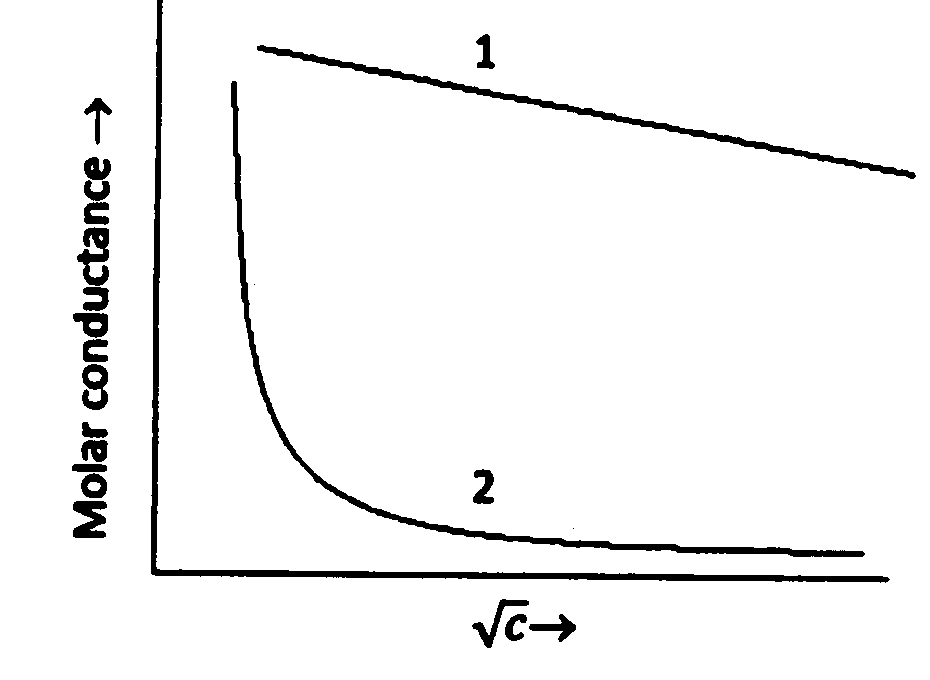
Consider the following graph showing variation of molar conductance with concentration of strong and weak electrolytes :

UPSC Combined Geo-Scientist Prelims 2025 Paper II (Chemistry), Q76: figure printed with the question

Which one of the following statements is correct with respect to the above graph ?

  1. (a) Both Plot 1 and Plot 2 can be explained using Debye-Hückel Theory.
  2. (b) Both Plot 1 and Plot 2 can be explained using Arrhenius theory of electrolytic dissociation.
  3. (c) Plot 1 and Plot 2 can be explained using Debye-Hückel Theory and Arrhenius theory of electrolytic dissociation respectively.
  4. (d) Plot 1 and Plot 2 can be explained using Arrhenius theory of electrolytic dissociation and Debye-Hückel Theory respectively.

Answer and explanation with the VKC plan

Q77Electrochemistry / Debye-Hückel-Onsager equation

The term BΛ^∞ √c in the Onsager equation Λ = Λ^∞ – (A + BΛ^∞) √c represents the :

  1. (a) Decrease in molar conductivity due to electrophoretic effect
  2. (b) Decrease in molar conductivity due to asymmetry effect
  3. (c) Increase in molar conductivity due to electrophoretic effect
  4. (d) Increase in molar conductivity due to asymmetry effect

Answer and explanation with the VKC plan

Q79Electrochemistry / degree of dissociation

The molar conductivity of 0.02 M formic acid is 40 S cm² mol⁻¹. The degree of dissociation and dissociation constant are respectively : [where, λ^∞ (H⁺) = 350 S cm² mol⁻¹ and λ^∞ (HCOO⁻) = 50 S cm² mol⁻¹]

  1. (a) 0.2 and 2.2 × 10⁻⁴
  2. (b) 0.1 and 2.2 × 10⁻⁶
  3. (c) 0.2 and 2.2 × 10⁻³
  4. (d) 0.1 and 2.2 × 10⁻⁴

Answer and explanation with the VKC plan

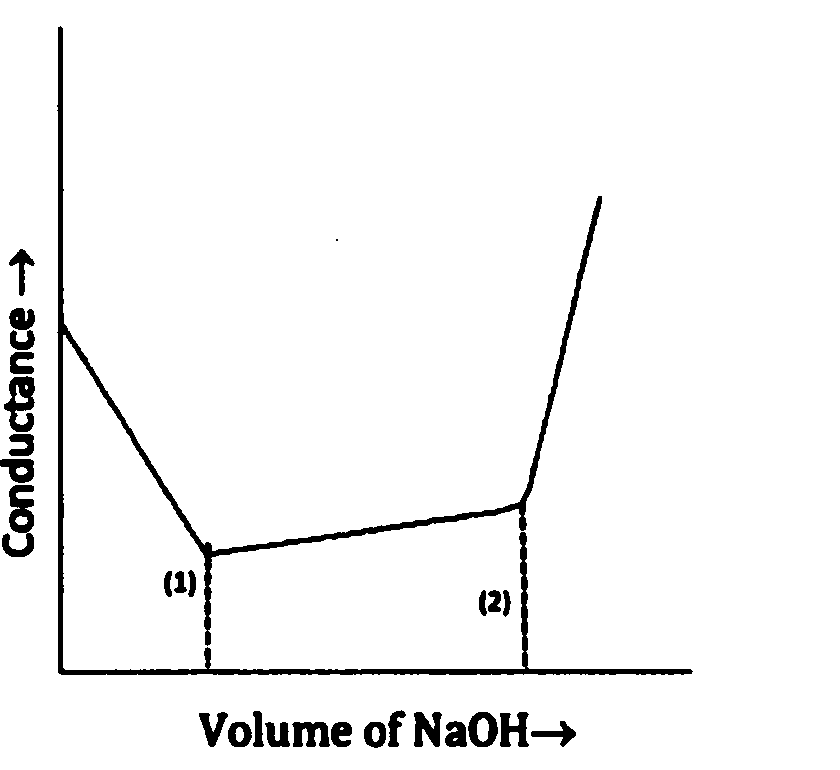
Q80Electrochemistry / conductometric titration

In the given plot of conductometric titration, the volumes corresponding to points (1) and (2) indicate respectively, the :

UPSC Combined Geo-Scientist Prelims 2025 Paper II (Chemistry), Q80: figure printed with the question
  1. (a) Neutralization of strong acid and weak acid
  2. (b) Neutralization of weak acid and strong acid
  3. (c) Hydrolysis of salt formed and neutralization of weak acid
  4. (d) Hydrolysis of salt formed and neutralization of strong acid

Answer and explanation with the VKC plan

Q81Organic / electrophilic addition to alkenes

Which one of the following represents the correct increasing order of reactivity among indicated compounds towards electrophilic reagents ?

  1. (a) CH₂ = CHNO₂ < CH₂ = CHN⁺(CH₃)₃ < CH₂ = CH₂ < CH₂ = CHCH₃ < CH₂ = CHBr < CH₂ = CHOCH₃
  2. (b) CH₂ = CHN⁺(CH₃)₃ < CH₂ = CHNO₂ < CH₂ = CH₂ < CH₂ = CHBr < CH₂ = CHCH₃ < CH₂ = CHOCH₃
  3. (c) CH₂ = CHNO₂ < CH₂ = CHN⁺(CH₃)₃ < CH₂ = CHBr < CH₂ = CH₂ < CH₂ = CHCH₃ < CH₂ = CHOCH₃
  4. (d) CH₂ = CHN⁺(CH₃)₃ < CH₂ = CHNO₂ < CH₂ = CHBr < CH₂ = CH₂ < CH₂ = CHOCH₃ < CH₂ = CHCH₃

Answer and explanation with the VKC plan

Q82Organic / bond lengths and hybridisation

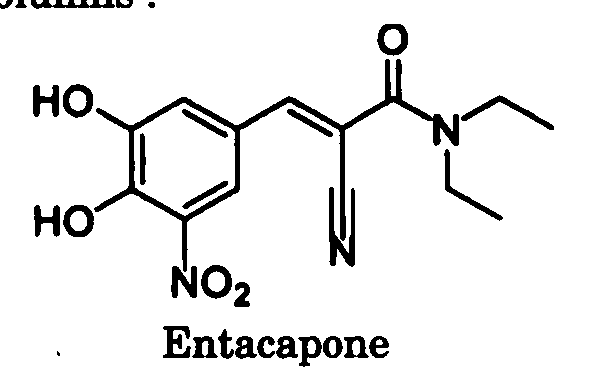
Entacapone is one of the constituents of drug used for Parkinson’s disease. The structure of entacapone is shown below. Match the type of bond from Column-I with the respective bond label from Column-II and select the correct answer using the code given below the columns :

Column-IColumn-II
A. Longest C – C single bond1. CH₂ – CH₃
B. Shortest C – C single bond2. C – CN
C. Longest C – N single bond3. C – NO₂
D. Shortest C – N single bond4. C ≡ N
5. CH = C(CN)
6. O = C – N
7. N – CH₂CH₃
UPSC Combined Geo-Scientist Prelims 2025 Paper II (Chemistry), Q82: figure printed with the question

Code :

  1. (a) A-5, B-2, C-6, D-7
  2. (b) A-1, B-5, C-7, D-4
  3. (c) A-2, B-1, C-4, D-3
  4. (d) A-5, B-2, C-3, D-6

Answer and explanation with the VKC plan

Q83Organic / alkene reactivity and stability

Consider the following statements :

  1. 2-Chloroprop-1-ene is more susceptible to attack by electrophiles than 3-chloroprop-1-ene.
  2. Ethyl but-3-enoate is more susceptible to electrophilic attack than ethyl(E)-but-2-enoate.
  3. Bicyclo[2.2.1]hept-2-ene is more stable than bicyclo[2.2.1]hept-1-ene.
  4. 2,3-Dimethyl-2-hexene has lesser heat of hydrogenation than 4,5-dimethyl-2-hexene.

How many of the above statement(s) is/are correct ?

  1. (a) One
  2. (b) Two
  3. (c) Three
  4. (d) Four

Answer and explanation with the VKC plan

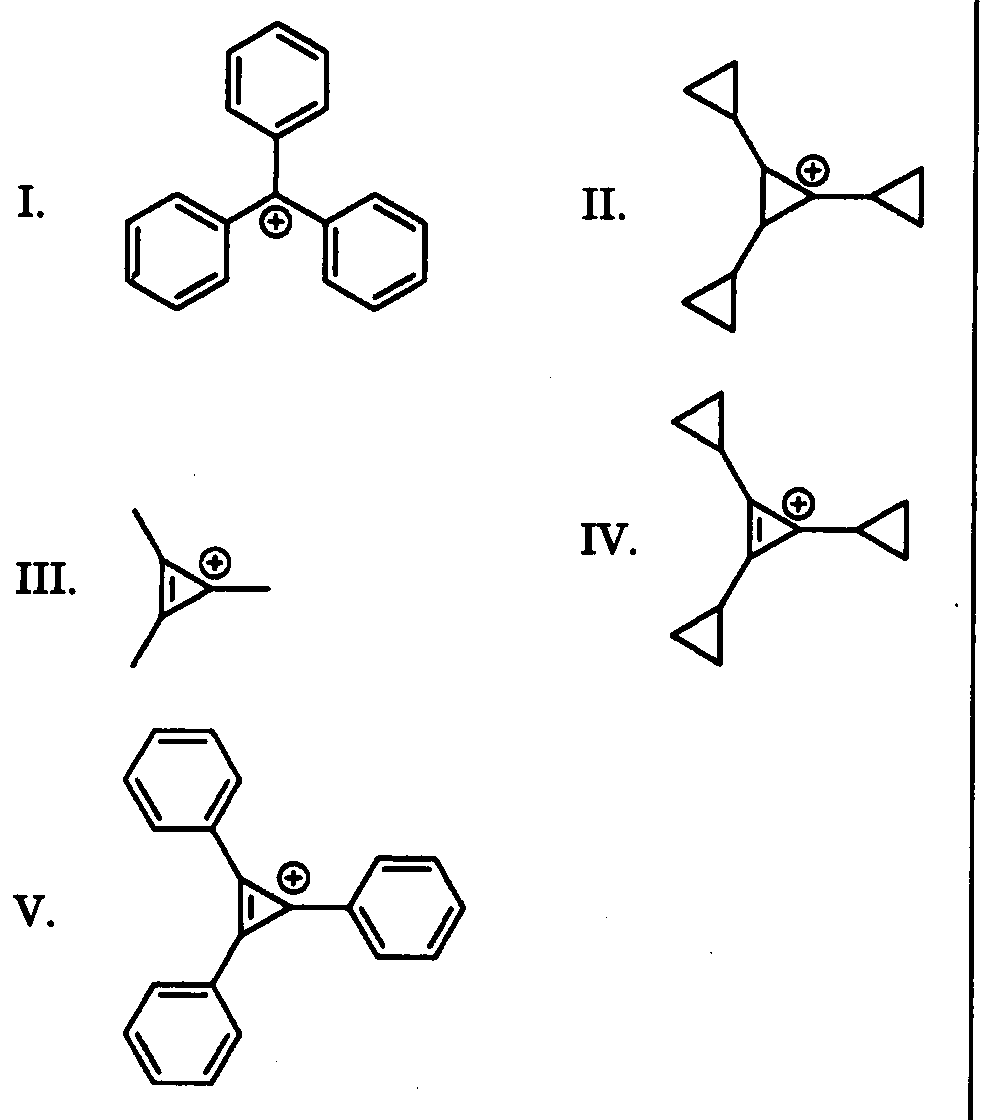
Q84Organic / carbocation stability and aromaticity

The relative increasing order of stability for the following carbocations is :

  1. I. Triphenylmethyl (trityl) cation
  2. II. Tricyclopropyl-substituted cyclopropyl cation (ring drawn without a double bond)
  3. III. Trimethylcyclopropenium cation
  4. IV. Tricyclopropylcyclopropenium cation
  5. V. Triphenylcyclopropenium cation
UPSC Combined Geo-Scientist Prelims 2025 Paper II (Chemistry), Q84: figure printed with the question
  1. (a) II < I < V < III < IV
  2. (b) I < II < V < III < IV
  3. (c) II < I < IV < III < V
  4. (d) I < II < III < IV < V

Answer and explanation with the VKC plan

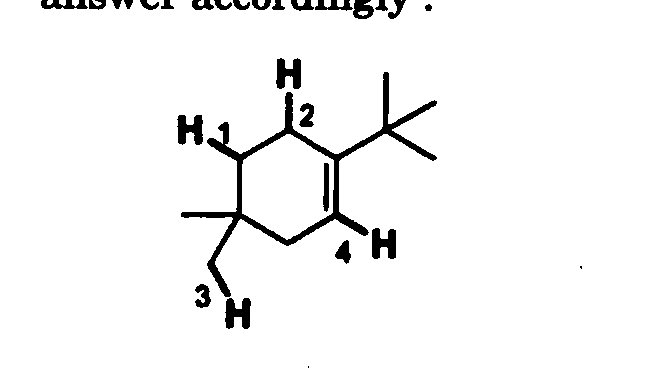
Q85Organic / free-radical halogenation

Rank the indicated C – H bonds in the following compound in order of increasing ease of H-abstraction in a radical halogenation reaction and select the correct answer accordingly :

UPSC Combined Geo-Scientist Prelims 2025 Paper II (Chemistry), Q85: figure printed with the question
  1. (a) 4 < 3 < 2 < 1
  2. (b) 2 < 1 < 3 < 4
  3. (c) 3 < 4 < 1 < 2
  4. (d) 4 < 3 < 1 < 2

Answer and explanation with the VKC plan

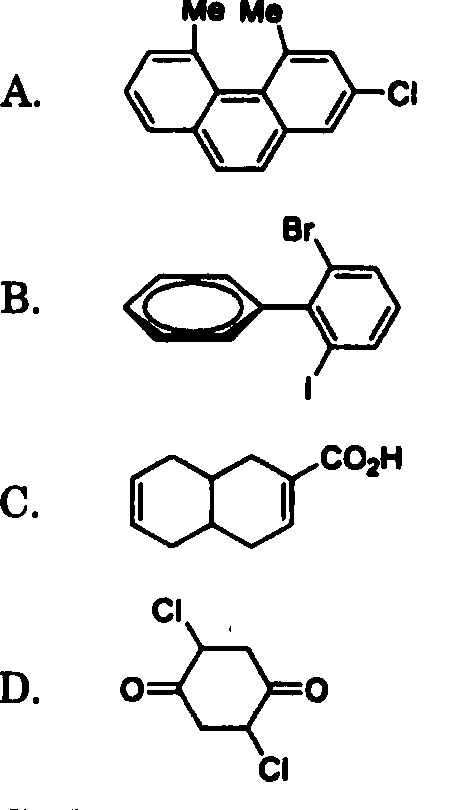
Q86Organic / stereoisomerism

Match the compound from Column-I with the possible number of stereoisomers from Column-II and select the correct answer using the code given below the columns :

Column-IColumn-II
A. 2-Chloro-4,5-dimethylphenanthrene (structure)1. Four
B. 2-Bromo-6-iodobiphenyl (structure)2. Three
C. 1,4,4a,5,8,8a-Hexahydronaphthalene-2-carboxylic acid with two ring-fusion CH (structure)3. Two
D. 2,5-Dichlorocyclohexane-1,4-dione (structure)4. One
UPSC Combined Geo-Scientist Prelims 2025 Paper II (Chemistry), Q86: figure printed with the question

Code :

  1. (a) A-2, B-1, C-4, D-3
  2. (b) A-2, B-4, C-1, D-3
  3. (c) A-3, B-4, C-1, D-2
  4. (d) A-3, B-1, C-4, D-2

Answer and explanation with the VKC plan

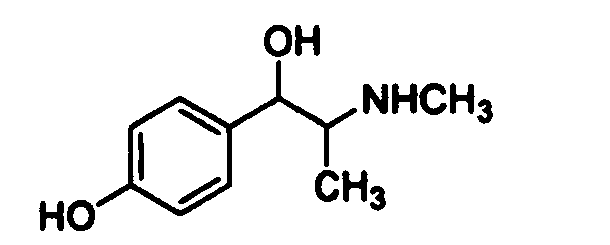
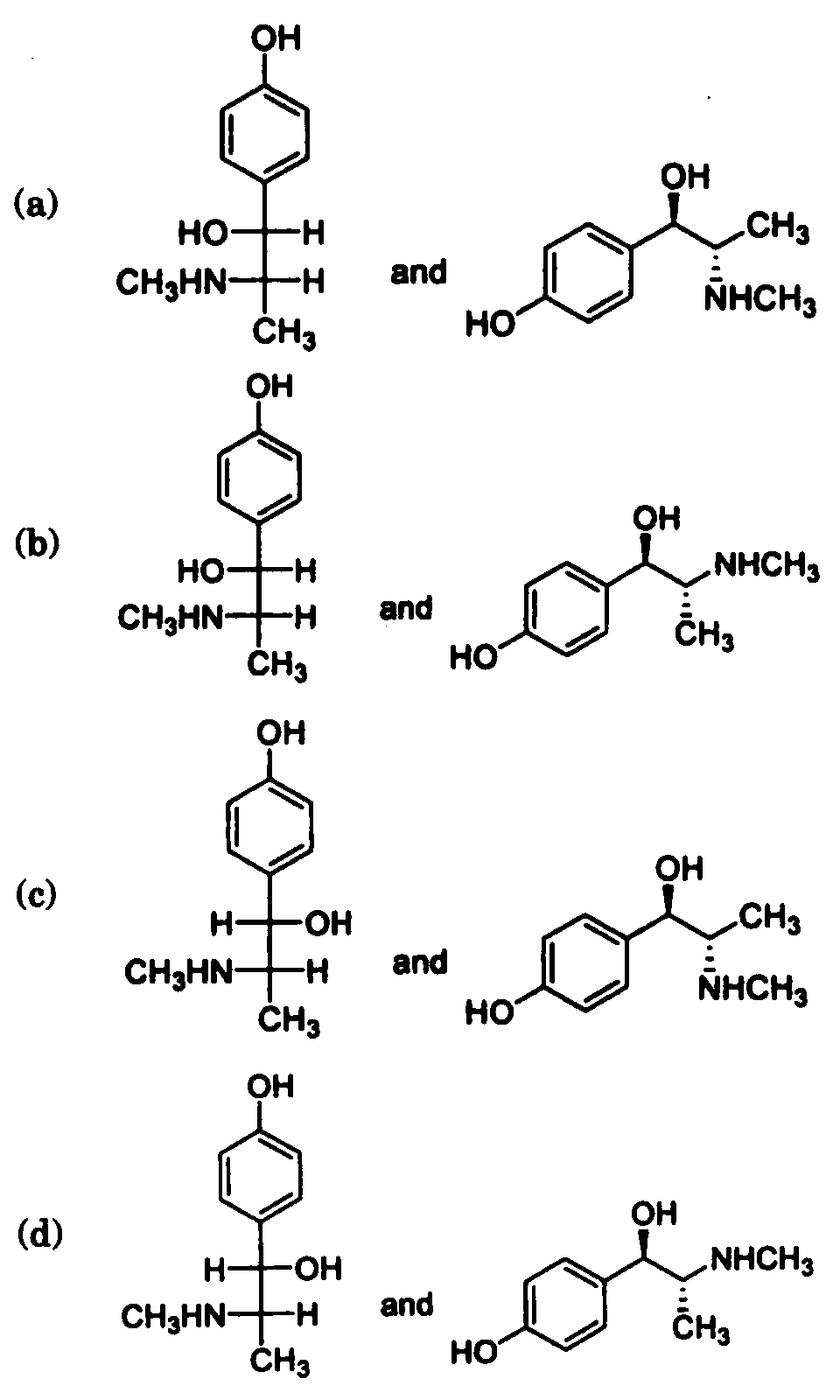
Q87Stereochemistry / Fischer and zig-zag projections

The Fischer projection formula and its corresponding zig-zag projection for the erythro configuration of the following compound are respectively :

UPSC Combined Geo-Scientist Prelims 2025 Paper II (Chemistry), Q87: figure printed with the question
UPSC Combined Geo-Scientist Prelims 2025 Paper II (Chemistry), Q87: answer options as printed
  1. (a) Fischer: HO and CH₃HN both on the left (H's on the right), Ar on top, CH₃ at bottom; zig-zag: OH wedged at C1, NHCH₃ hashed at C2 with CH₃ continuing the chain
  2. (b) Fischer: HO and CH₃HN both on the left (H's on the right); zig-zag: OH wedged at C1, NHCH₃ in the chain at C2 with CH₃ hashed
  3. (c) Fischer: H–C–OH (OH right) over CH₃HN–C–H (NHCH₃ left); zig-zag: OH wedged at C1, NHCH₃ hashed at C2 with CH₃ continuing the chain
  4. (d) Fischer: H–C–OH (OH right) over CH₃HN–C–H (NHCH₃ left); zig-zag: OH wedged at C1, NHCH₃ in the chain at C2 with CH₃ hashed

Answer and explanation with the VKC plan

Q88Stereochemistry / CIP priority change

The absolute configurations of chiral centres in the product formed in the following reaction is :
(2R, 3R) — HOCH₂CHOHCHOHCH₂OH + HBr ⟶ HOCH₂CHOHCHOHCH₂Br

  1. (a) (2R, 3R)
  2. (b) (2S, 3S)
  3. (c) (2R, 3S)
  4. (d) (2S, 3R)

Answer and explanation with the VKC plan

Q89Stereochemistry / disubstituted cyclohexanes

Consider the following statements regarding the stereochemistry of 1, 4-dichlorocyclohexane :

  1. It can exist as enantiomers but no diastereomers are possible.
  2. It can exist as enantiomers as well as diastereomers.
  3. It can exist as diastereomers but no enantiomers are possible.

Which of the statement(s) given above is/are correct ?

  1. (a) 1 and 2
  2. (b) 2 only
  3. (c) 2 and 3
  4. (d) 3 only

Answer and explanation with the VKC plan

Q90Conformational analysis / haloethanes

Consider the following statements regarding haloethanes :
Statement 1 : Chloroethane and iodoethane have similar barrier to rotation around C1 – C2 bond (13.4 – 15.5 kJ/mol) despite the fact that the size of the halogen increases down the group in periodic table.
Statement 2 : The C – Cl bond in chloroethane is much longer than C – I bond in iodoethane.

Which one of the following is correct in respect of above statements ?

  1. (a) Both statement 1 and statement 2 are true and statement 2 is the correct explanation of statement 1.
  2. (b) Both statement 1 and statement 2 are true but statement 2 is not the correct explanation of statement 1.
  3. (c) Statement 1 is true but statement 2 is false.
  4. (d) Statement 1 is false but statement 2 is true.

Answer and explanation with the VKC plan

Q91Reaction mechanism / solvent effects (Hughes-Ingold rules)

Consider the following statements regarding Reaction I and Reaction II :
Reaction I : HO⁻ + CH₃OSO₂Ph —SN2→ CH₃OH + PhSO₂O⁻
Reaction II : N(CH₂CH₃)₃ + CH₃CH₂I —SN2→ (CH₃CH₂)₄N⁺I⁻

  1. With increase in solvent polarity, the rate of Reaction I is slightly reduced.
  2. With increase in solvent polarity, the rate of Reaction I is slightly increased.
  3. With increase in solvent polarity, the rate of Reaction II is greatly increased.
  4. With increase in solvent polarity, the rate of Reaction II is greatly decreased.

Which of the statements given above are correct ?

  1. (a) 1 and 3
  2. (b) 1 and 4
  3. (c) 2 and 3
  4. (d) 2 and 4

Answer and explanation with the VKC plan

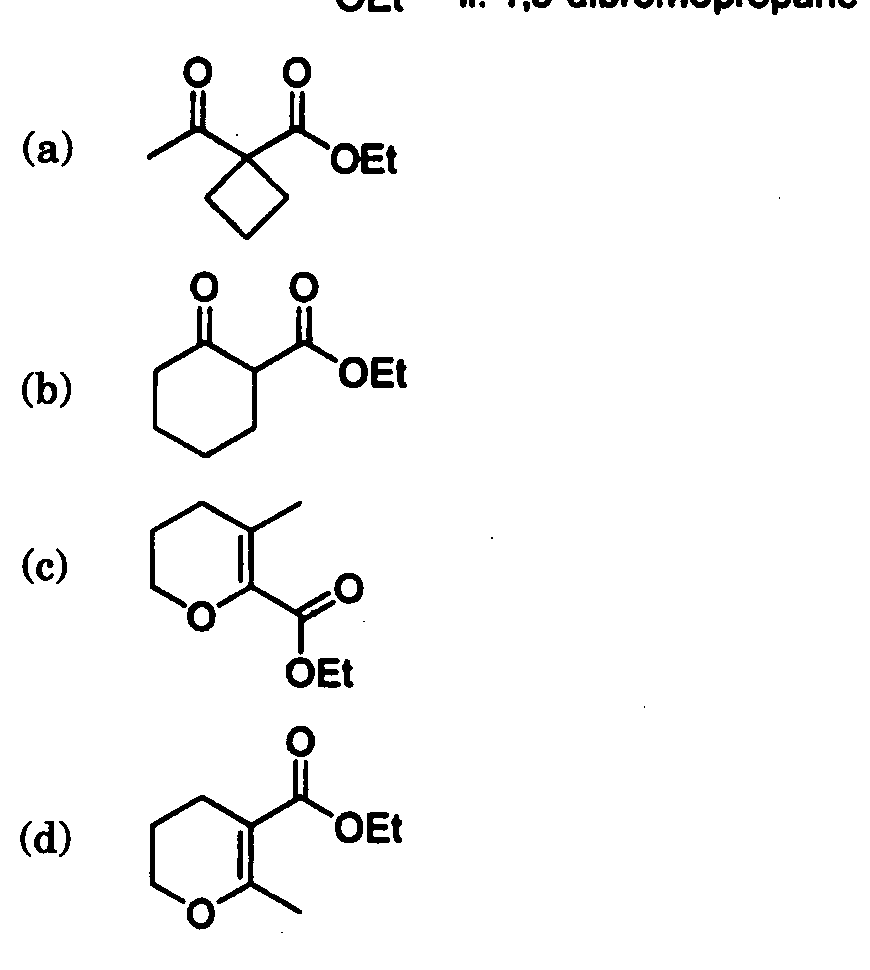
Q92Organic / enolate alkylation, ring size

The major product formed in the following reaction sequence is :
CH₃COCH₂COOEt —(i. NaOEt (2 equiv.); ii. 1,3-dibromopropane)→

UPSC Combined Geo-Scientist Prelims 2025 Paper II (Chemistry), Q92: figure printed with the question
UPSC Combined Geo-Scientist Prelims 2025 Paper II (Chemistry), Q92: answer options as printed
  1. (a) Ethyl 1-acetylcyclobutane-1-carboxylate
  2. (b) Ethyl 2-oxocyclohexane-1-carboxylate
  3. (c) Ethyl 3-methyl-5,6-dihydro-4H-pyran-2-carboxylate (ester on the carbon bonded to ring O)
  4. (d) Ethyl 2-methyl-5,6-dihydro-4H-pyran-3-carboxylate

Answer and explanation with the VKC plan

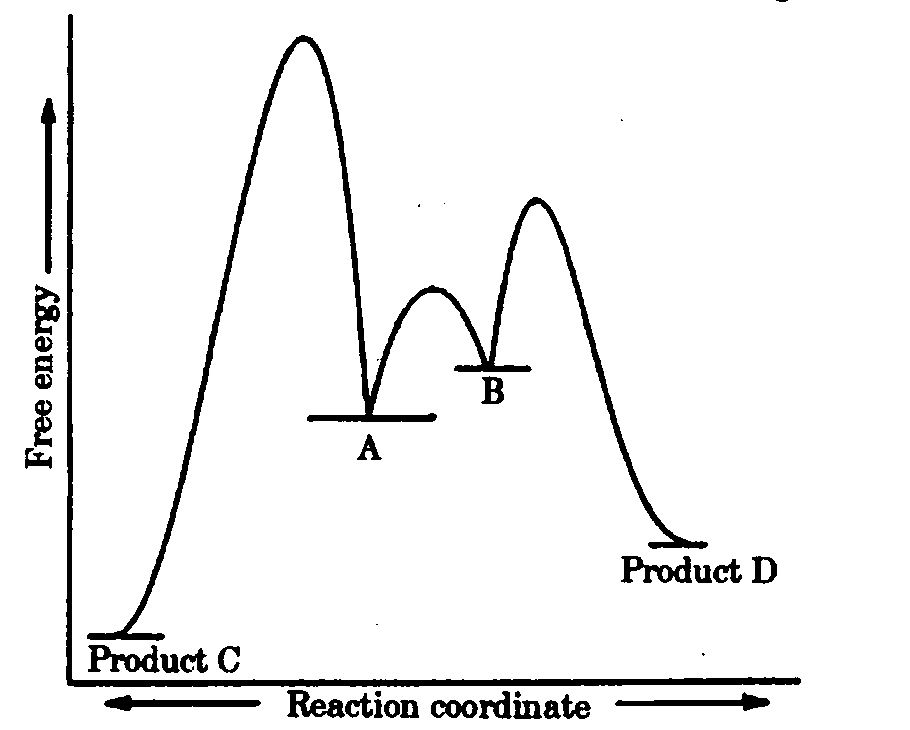
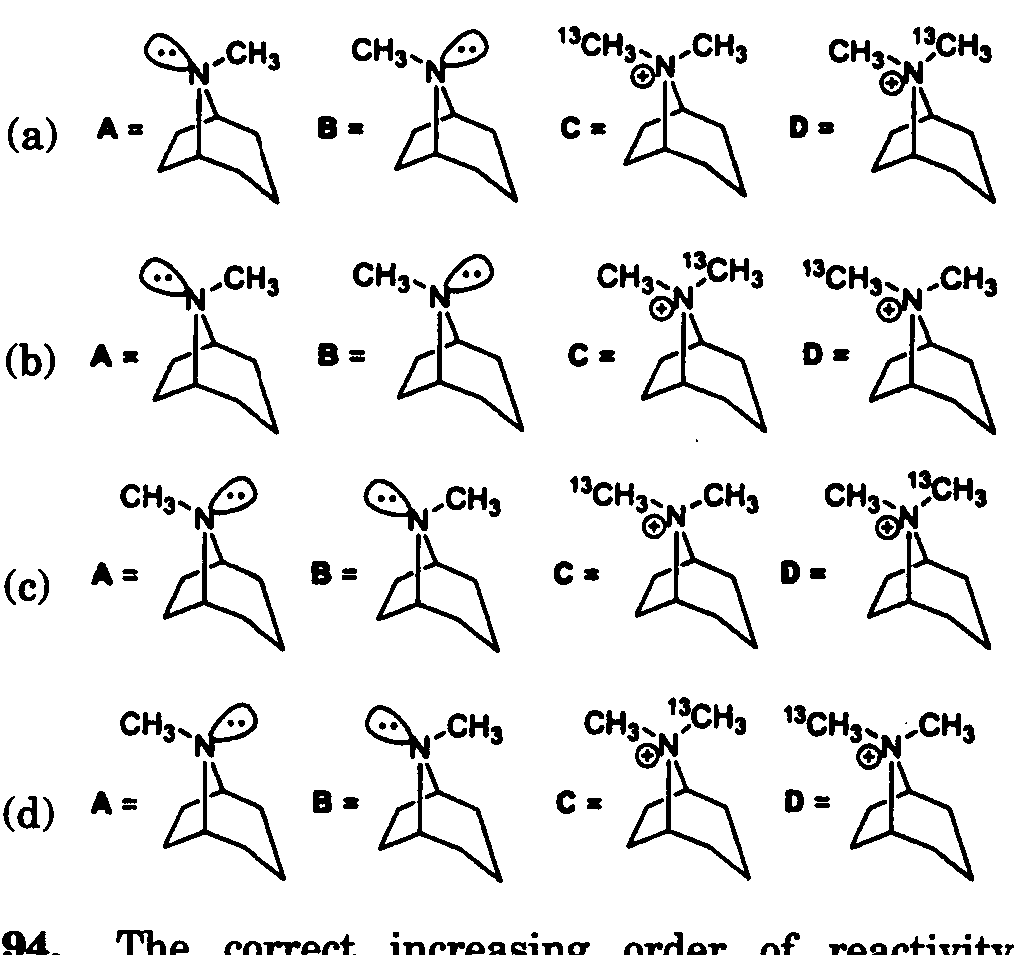
Q93Stereochemistry / nitrogen inversion, Curtin-Hammett

The structures of conformer A and B as well as the products C and D in the following free energy profile diagram for the SN2 reaction of tropane with isotopically labelled ¹³CH₃I is :

UPSC Combined Geo-Scientist Prelims 2025 Paper II (Chemistry), Q93: figure printed with the question
UPSC Combined Geo-Scientist Prelims 2025 Paper II (Chemistry), Q93: answer options as printed
  1. (a) A = N-CH₃ over the propano (six-ring) side, lone pair over the ethano bridge; B = N-CH₃ over the ethano bridge; C = ¹³CH₃ on ethano side, CH₃ on six-ring side; D = CH₃ on ethano side, ¹³CH₃ on six-ring side
  2. (b) A = N-CH₃ over the six-ring side; B = N-CH₃ over the ethano bridge; C = CH₃ on ethano side, ¹³CH₃ on six-ring side; D = ¹³CH₃ on ethano side, CH₃ on six-ring side
  3. (c) A = N-CH₃ over the ethano bridge, lone pair over the six-ring side; B = N-CH₃ over the six-ring side; C = ¹³CH₃ on ethano side, CH₃ on six-ring side; D = CH₃ on ethano side, ¹³CH₃ on six-ring side
  4. (d) A = N-CH₃ over the ethano bridge, lone pair over the six-ring side; B = N-CH₃ over the six-ring side; C = CH₃ on ethano side, ¹³CH₃ on six-ring side; D = ¹³CH₃ on ethano side, CH₃ on six-ring side

Answer and explanation with the VKC plan

Q94Reaction mechanism / leaving-group ability in SN1

The correct increasing order of reactivity towards SN1 substitution of the indicated compounds is :

  1. (a) sec-butyl triflate < sec-butyl tosylate < sec-butyl chloride < sec-butyl bromide
  2. (b) sec-butyl chloride < sec-butyl bromide < sec-butyl triflate < sec-butyl tosylate
  3. (c) sec-butyl chloride < sec-butyl bromide < sec-butyl tosylate < sec-butyl triflate
  4. (d) sec-butyl triflate < sec-butyl tosylate < sec-butyl bromide < sec-butyl chloride

Answer and explanation with the VKC plan

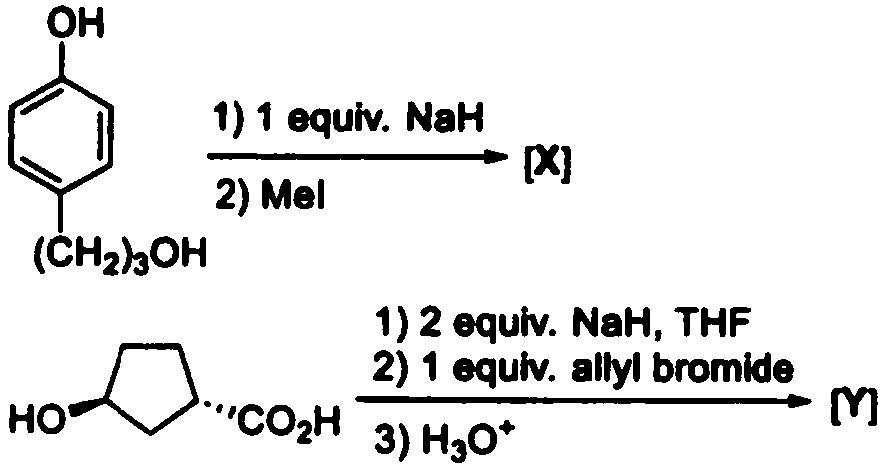
Q95Organic / chemoselective O-alkylation

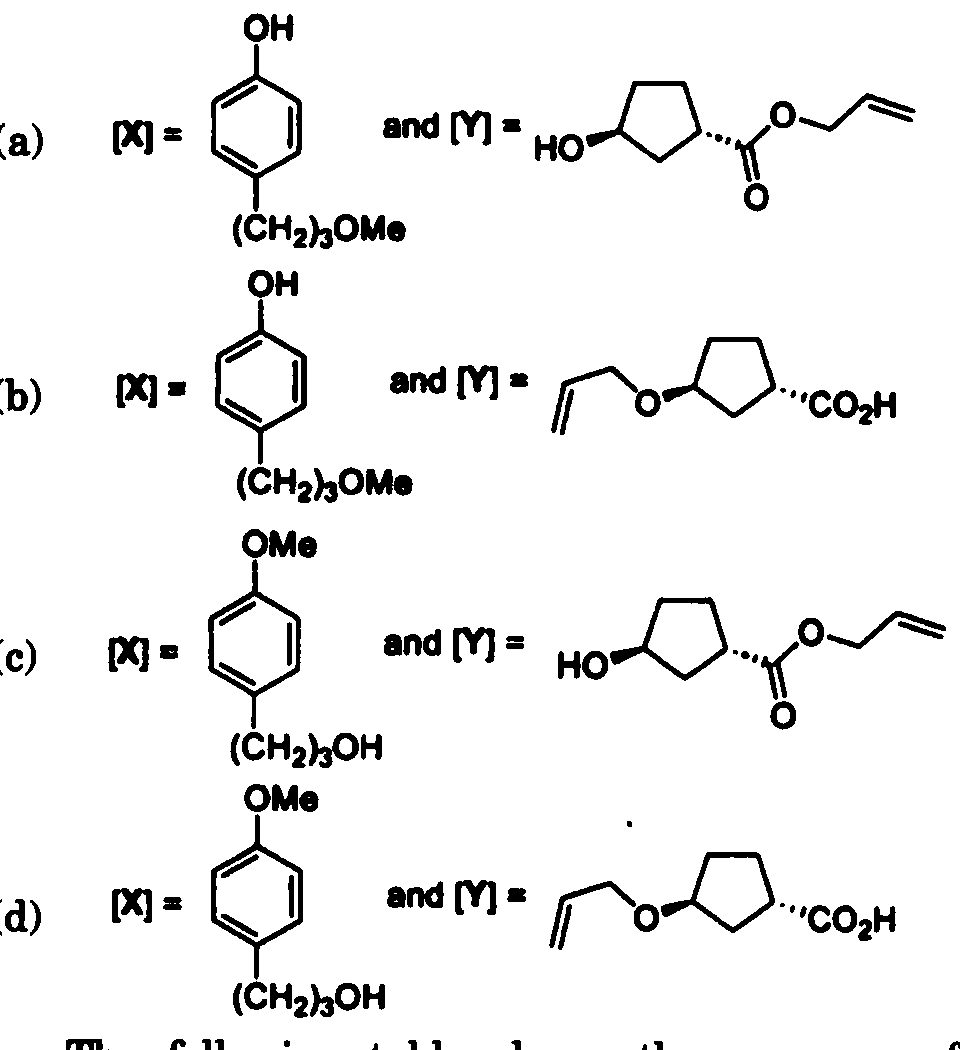
The major products [X] and [Y] formed in the following reactions are :

UPSC Combined Geo-Scientist Prelims 2025 Paper II (Chemistry), Q95: figure printed with the question
UPSC Combined Geo-Scientist Prelims 2025 Paper II (Chemistry), Q95: answer options as printed
  1. (a) [X] = 4-(3-methoxypropyl)phenol and [Y] = allyl ester of the hydroxycyclopentanecarboxylic acid (free OH)
  2. (b) [X] = 4-(3-methoxypropyl)phenol and [Y] = allyl ether of the ring OH (free CO₂H)
  3. (c) [X] = 3-(4-methoxyphenyl)propan-1-ol and [Y] = allyl ester of the hydroxycyclopentanecarboxylic acid (free OH)
  4. (d) [X] = 3-(4-methoxyphenyl)propan-1-ol and [Y] = allyl ether of the ring OH (free CO₂H)

Answer and explanation with the VKC plan

Q96Organic / functional group tests

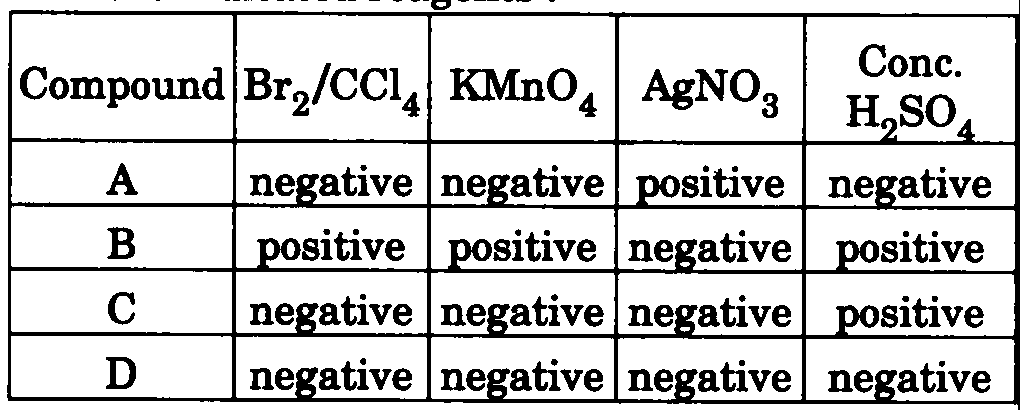
The following table shows the response of chemical analysis of compounds A – D using the indicated reagents :

UPSC Combined Geo-Scientist Prelims 2025 Paper II (Chemistry), Q96: figure printed with the question

The compounds A – D on the basis of above data are :

  1. (a) A = tert-pentyl alcohol, B = n-pentyl bromide, C = isobutylene, D = isobutane
  2. (b) A = isobutane, B = n-pentyl bromide, C = isobutylene, D = tert-pentyl alcohol
  3. (c) A = isobutane, B = tert-pentyl alcohol, C = isobutylene, D = n-pentyl bromide
  4. (d) A = n-pentyl bromide, B = isobutylene, C = tert-pentyl alcohol, D = isobutane

Answer and explanation with the VKC plan

Q97Organic / Hofmann exhaustive methylation

The isomeric methyl piperidine with molecular formula C₆H₁₃N shown in the Column-I undergo following set of reactions :
C₆H₁₃N —[(i) excess CH₃I/K₂CO₃ (ii) Ag₂O, H₂O (iii) heat]→ —[(i) excess CH₃I/K₂CO₃ (ii) Ag₂O, H₂O (iii) heat]→ Major product
Match the isomeric methyl piperidine compound from Column-I with the major product formed from Column-II and select the correct answer using the code given below the columns :

Column-IColumn-II
A. 1-Methylpiperidine1. 1,4-hexadiene
B. 2-Methylpiperidine2. 1,5-hexadiene
C. 3-Methylpiperidine3. 1,4-pentadiene
D. 4-Methylpiperidine4. 2-methyl-1,4-pentadiene
5. 3-methyl-1,4-pentadiene

Code :

  1. (a) A-2, B-3, C-1, D-5
  2. (b) A-3, B-1, C-5, D-4
  3. (c) A-3, B-2, C-4, D-5
  4. (d) A-2, B-4, C-1, D-3

Answer and explanation with the VKC plan

Q98Stereochemistry / stereospecific additions to alkenes

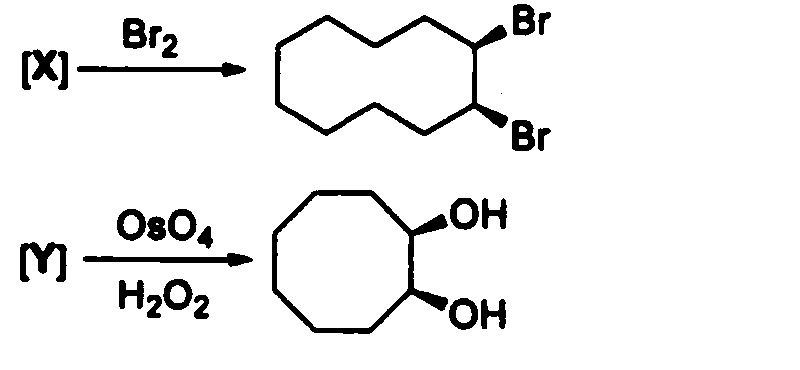
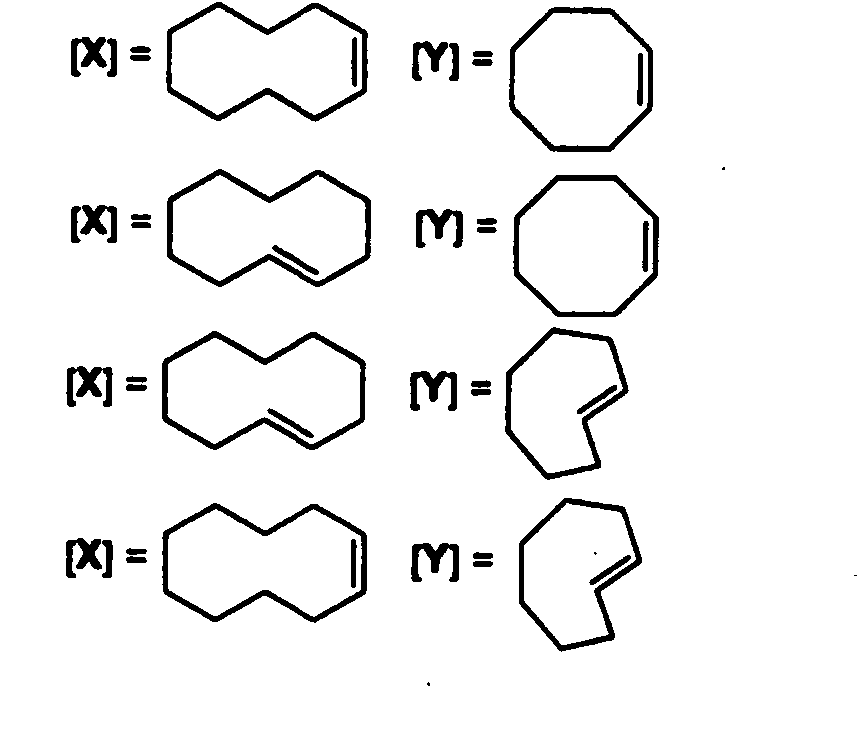
The precursors [X] and [Y] in the following transformations are :

UPSC Combined Geo-Scientist Prelims 2025 Paper II (Chemistry), Q98: figure printed with the question
UPSC Combined Geo-Scientist Prelims 2025 Paper II (Chemistry), Q98: answer options as printed
  1. (a) [X] = cis-cyclodecene; [Y] = cis-cyclooctene
  2. (b) [X] = trans-cyclodecene; [Y] = cis-cyclooctene
  3. (c) [X] = trans-cyclodecene; [Y] = trans-cyclooctene
  4. (d) [X] = cis-cyclodecene; [Y] = trans-cyclooctene

Answer and explanation with the VKC plan

Q99Organic / conformational effects on reactivity

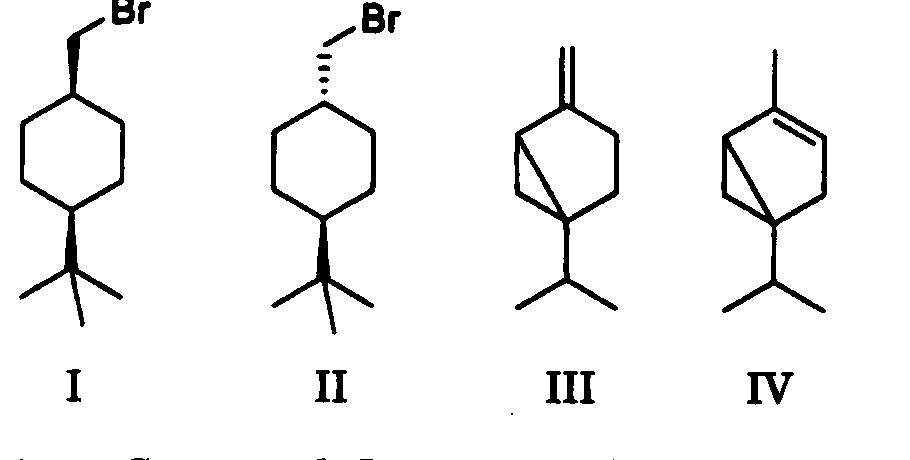
Consider the following statements regarding compounds I – IV :

  1. Compound I reacts with KOCMe₃ in t-butyl alcohol faster than compound II.
  2. Compound I reacts with KOCMe₃ in t-butyl alcohol slower than compound II.
  3. Compound III undergoes acid-catalyzed hydration faster than compound IV.
  4. Compound III undergoes acid-catalyzed hydration slower than compound IV.
UPSC Combined Geo-Scientist Prelims 2025 Paper II (Chemistry), Q99: figure printed with the question

Which of the statements given above are correct ?

  1. (a) 1 and 3
  2. (b) 1 and 4
  3. (c) 2 and 3
  4. (d) 2 and 4

Answer and explanation with the VKC plan

Q100Reaction mechanism / Mannich base elimination-addition

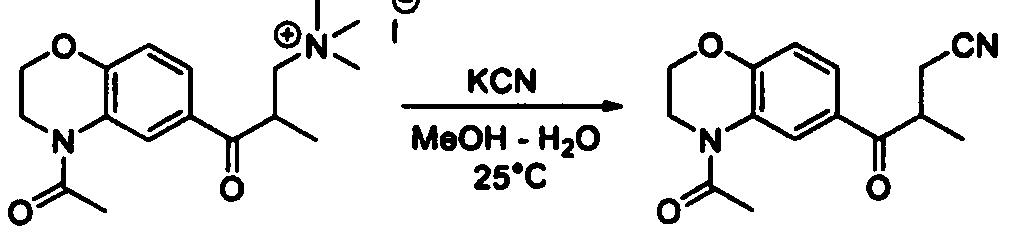
The correct description of the mechanism adopted by the following transformation is :

UPSC Combined Geo-Scientist Prelims 2025 Paper II (Chemistry), Q100: figure printed with the question
  1. (a) E1 elimination followed by 1,4-conjugate addition of cyanide anion
  2. (b) E2 elimination followed by 1,4-conjugate addition of cyanide anion
  3. (c) E1cB elimination followed by 1,4-conjugate addition of cyanide anion
  4. (d) Straightforward SN2 pathway involving cyanide anion as nucleophile

Answer and explanation with the VKC plan

Q101Natural products / alkaloids (coniine)

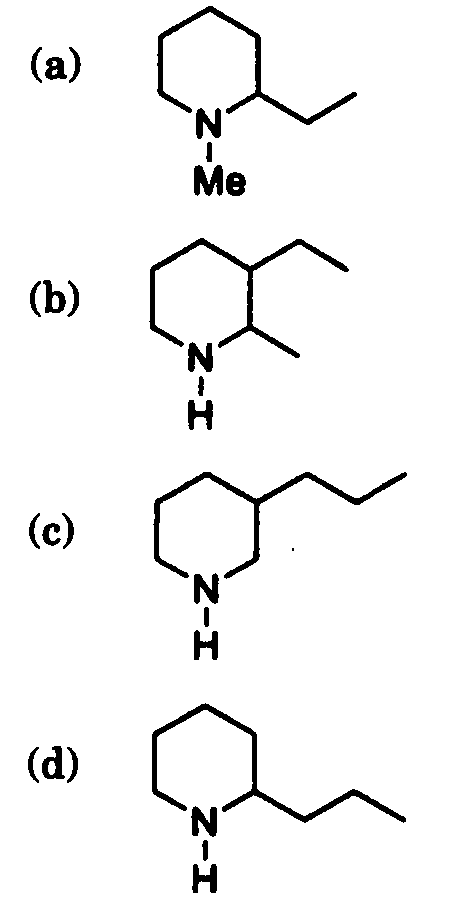
The natural product X (C₈H₁₇N) on zinc distillation followed by KMnO₄ oxidation forms pyridine-2-carboxylic acid. The reaction of X with HI at 300°C under pressure forms n-octane. The compound X consumes two moles of MeI to form quaternary ammonium salt which undergoes Hofmann degradation to form octa-1,4-diene. The subsequent reduction of octa-1,4-diene forms n-octane. On the basis of these chemical evidences, what is the structure of an unknown compound X ?

UPSC Combined Geo-Scientist Prelims 2025 Paper II (Chemistry), Q101: answer options as printed
  1. (a) 1-Methyl-2-ethylpiperidine
  2. (b) 3-Ethyl-2-methylpiperidine
  3. (c) 3-Propylpiperidine
  4. (d) 2-Propylpiperidine

Answer and explanation with the VKC plan

Q102Organic / Grob-type fragmentation, lactonisation

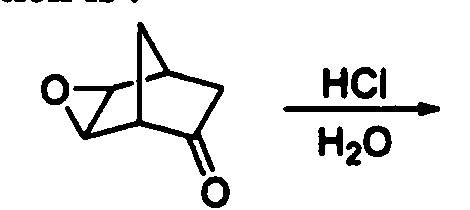
The major product formed in the following reaction is :

UPSC Combined Geo-Scientist Prelims 2025 Paper II (Chemistry), Q102: figure printed with the question
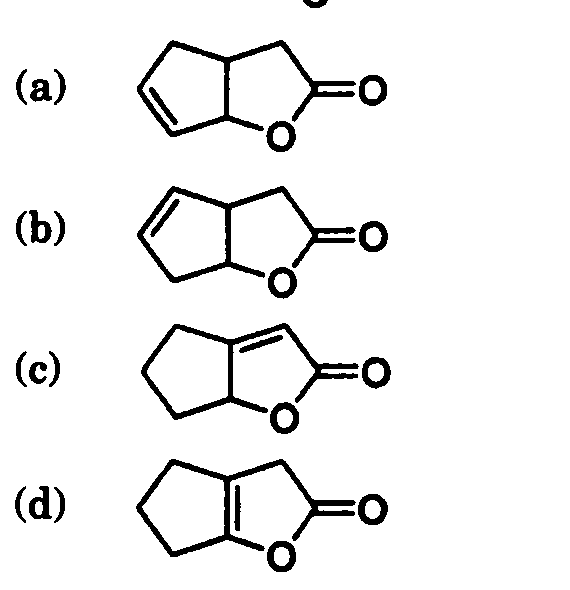
UPSC Combined Geo-Scientist Prelims 2025 Paper II (Chemistry), Q102: answer options as printed
  1. (a) cis-fused cyclopentene γ-lactone with C=C next to the O-bearing ring-fusion carbon (2-oxabicyclo[3.3.0]oct-7-en-3-one type)
  2. (b) cis-fused cyclopentene γ-lactone with C=C next to the CH-bearing ring-fusion carbon
  3. (c) bicyclic γ-lactone with C=C at the ring fusion conjugated to C=O (butenolide)
  4. (d) bicyclic γ-lactone with C=C at the ring fusion bearing the ring O (enol lactone)

Answer and explanation with the VKC plan

Q103Organic / intramolecular Michael addition

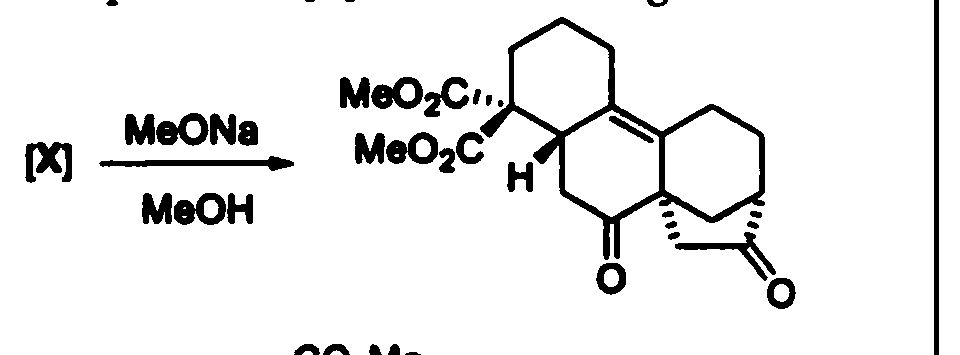
The precursor [X] in the following reaction is :

UPSC Combined Geo-Scientist Prelims 2025 Paper II (Chemistry), Q103: figure printed with the question
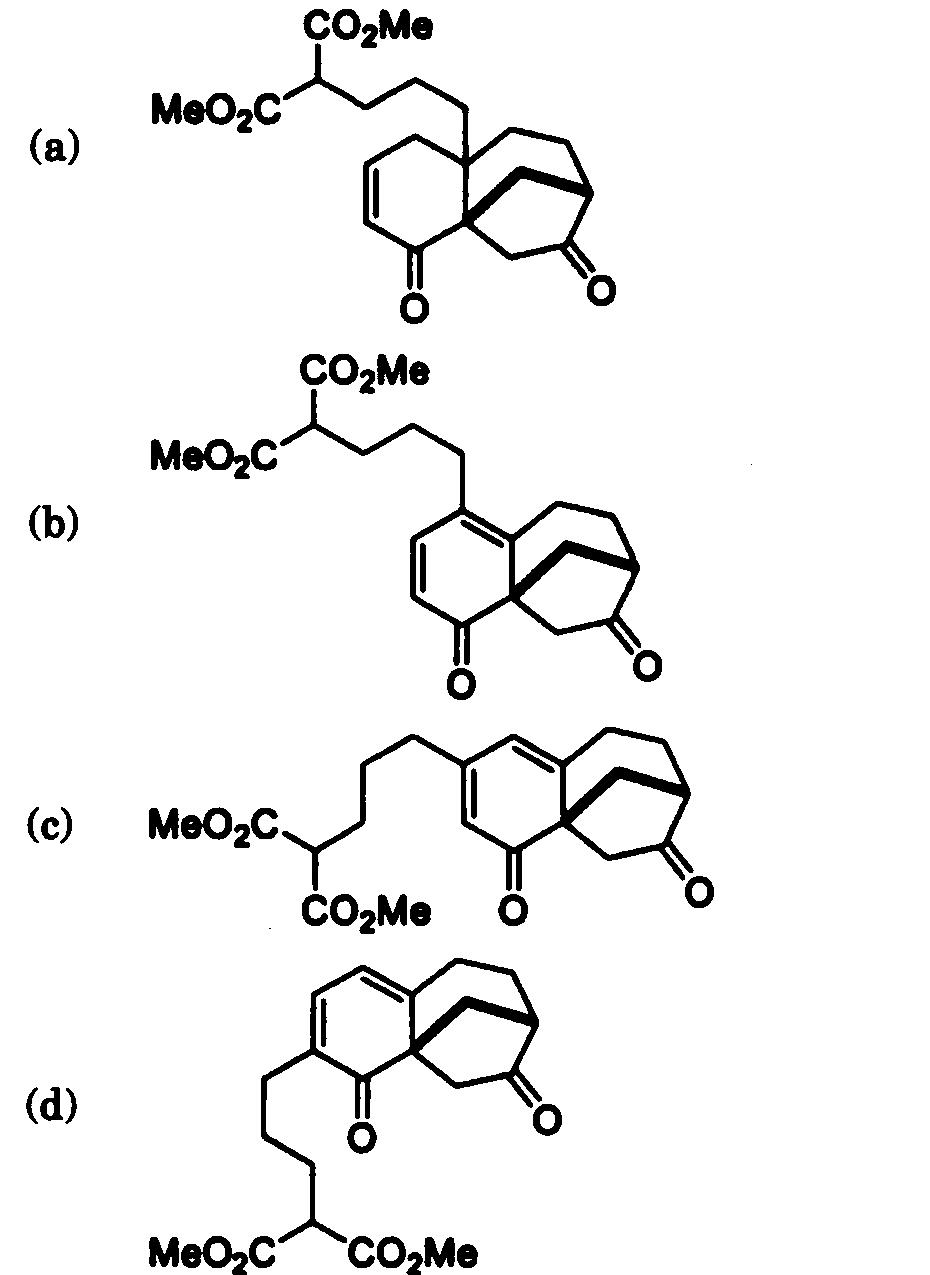
UPSC Combined Geo-Scientist Prelims 2025 Paper II (Chemistry), Q103: answer options as printed
  1. (a) Malonate-tethered tricyclic enone with the side chain on the quaternary ring carbon (one C=C, conjugated to the ring ketone)
  2. (b) Linear dienone O=C–CH=CH–C(R)=C< with the CH(CO₂Me)₂(CH₂)₃ chain on the γ-carbon of the dienone
  3. (c) Dienone with the CH(CO₂Me)₂(CH₂)₃ chain on the β-carbon (C=C–C=C ring, chain meta to C=O)
  4. (d) Dienone with the CH(CO₂Me)₂(CH₂)₃ chain on the α-carbon next to the ring C=O

Answer and explanation with the VKC plan

Q104Organic / selectivity in electrophilic addition

Consider the following statements :

  1. The addition of HBr to 3-methyl-2-pentene is a stereospecific reaction.
  2. The addition of HBr to 3-methyl-2-pentene is a stereoselective reaction.
  3. The addition of HBr to 3-methyl-2-pentene is a regioselective reaction.

Which of the statement(s) given above is/are correct ?

  1. (a) 1 and 2
  2. (b) 1 and 3
  3. (c) 2 and 3
  4. (d) 3 only

Answer and explanation with the VKC plan

Q105Organic / Markovnikov addition

Which one of the following alkenes cannot produce 3-chloro-3-methylhexane as the major product by addition of HCl ?

  1. (a) 3-ethylpent-2-ene
  2. (b) 3-methylenehexane
  3. (c) (E)-3-methylhex-2-ene
  4. (d) (Z)-3-methylhex-3-ene

Answer and explanation with the VKC plan

Q106Organic / electrophilic addition to allenes

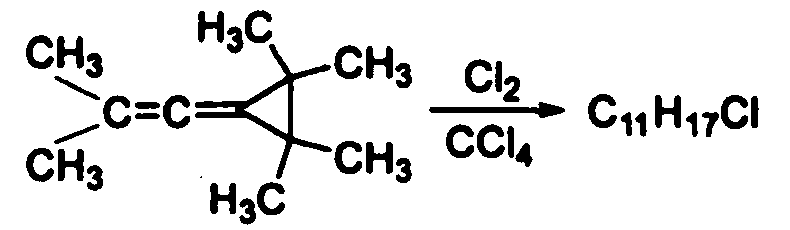
The number of sp and sp² carbons present in the major product (C₁₁H₁₇Cl) formed in the following reaction are :

UPSC Combined Geo-Scientist Prelims 2025 Paper II (Chemistry), Q106: figure printed with the question
  1. (a) Zero and two respectively
  2. (b) Two and zero respectively
  3. (c) Two and two respectively
  4. (d) Zero and four respectively

Answer and explanation with the VKC plan

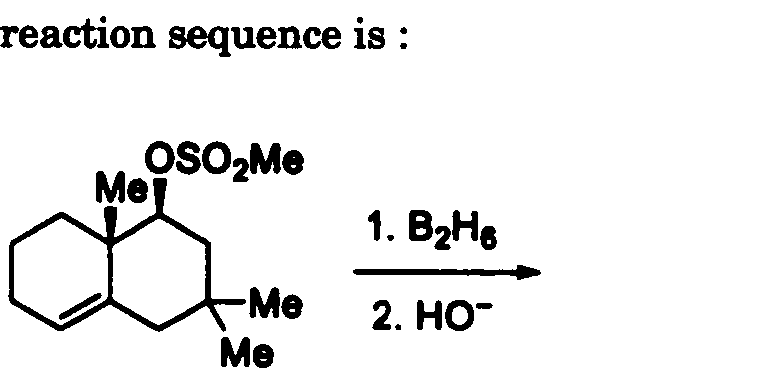
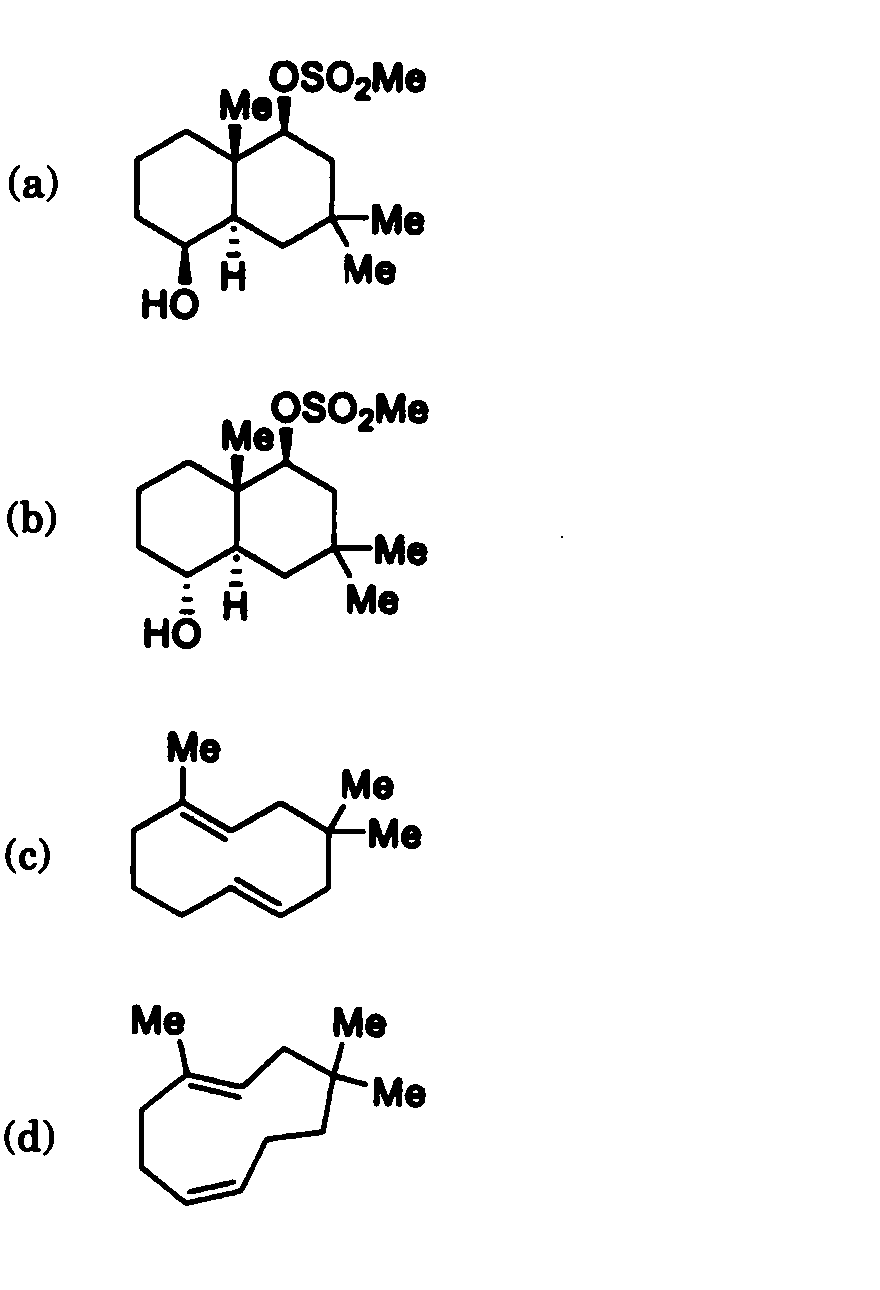
Q107Organic / boronate (Marshall) fragmentation

The major product formed in the following reaction sequence is :

UPSC Combined Geo-Scientist Prelims 2025 Paper II (Chemistry), Q107: figure printed with the question
UPSC Combined Geo-Scientist Prelims 2025 Paper II (Chemistry), Q107: answer options as printed
  1. (a) trans-Decalin alcohol with OH β (wedge) at the former alkene carbon, OSO₂Me retained
  2. (b) trans-Decalin alcohol with OH α (hash) at the former alkene carbon, OSO₂Me retained
  3. (c) (E,E)-1,6-cyclodecadiene with one Me on a ring alkene carbon and a gem-dimethyl group
  4. (d) (E,Z)-1,6-cyclodecadiene with one Me on a ring alkene carbon and a gem-dimethyl group

Answer and explanation with the VKC plan

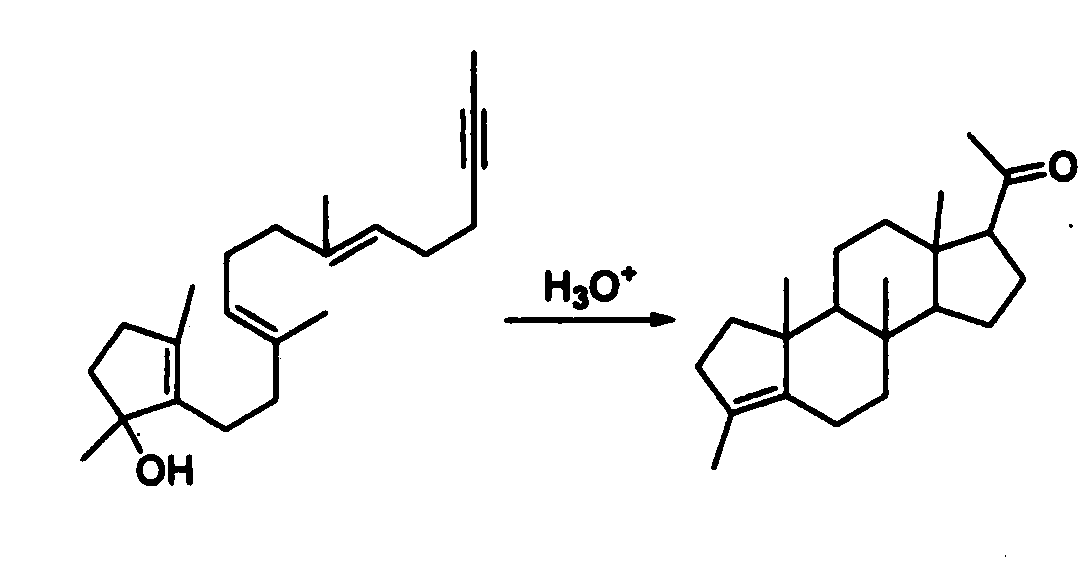
Q108Organic / biomimetic polyene cyclisation

The number of potential tertiary carbocations as reactive intermediates likely to be formed in the mechanism of the following reaction are :

UPSC Combined Geo-Scientist Prelims 2025 Paper II (Chemistry), Q108: figure printed with the question
  1. (a) Three
  2. (b) Four
  3. (c) Five
  4. (d) Six

Answer and explanation with the VKC plan

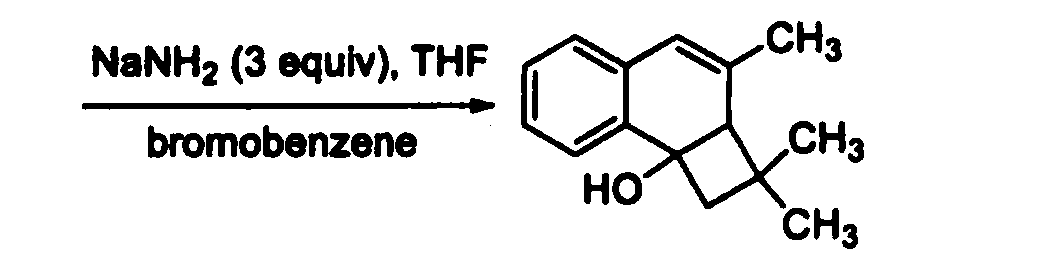
Q109Organic / arynic condensation of enolates

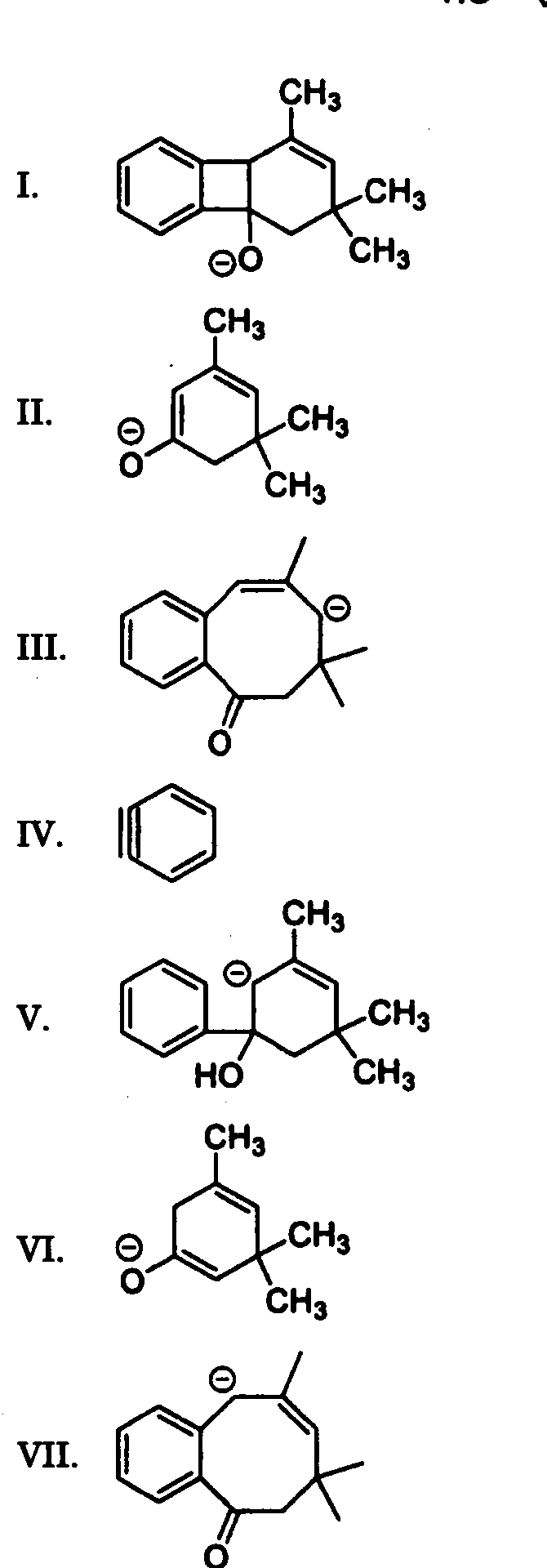
The reactive intermediates likely to form in the following reaction is :
3,5,5-trimethylcyclohex-2-en-1-one —[NaNH₂ (3 equiv), THF, bromobenzene]→

UPSC Combined Geo-Scientist Prelims 2025 Paper II (Chemistry), Q109: figure printed with the question
  1. (a) I, II, III and IV
  2. (b) IV, V, VI and VII
  3. (c) II, IV, V and VII
  4. (d) II, III, V and VII

Answer and explanation with the VKC plan

Q110Reaction mechanism / kinetic isotope effect in SEAr

Which one of the following statements is correct regarding the reaction mechanism, if we assume the presence of kinetic isotope effect in aromatic electrophilic substitution ?

  1. (a) C₆D₆ will react faster than C₆H₆ under identical reaction conditions.
  2. (b) The formation of σ-complex is a rate determining step.
  3. (c) The o/p-ratio of the products formed from anisole will be less than that of 4-deuterioanisole.
  4. (d) The D/H ratio will be higher in the reactant than the major product formed when 1,3,5-trideuteriobenzene undergoes mono-electrophilic substitution reaction.

Answer and explanation with the VKC plan

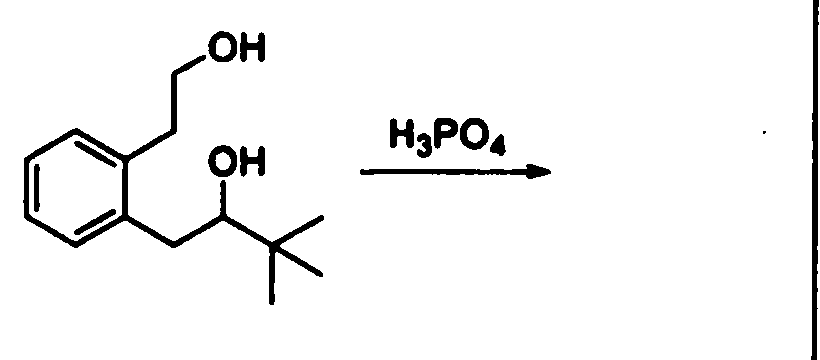
Q111Organic / carbocation rearrangement, Friedel-Crafts cyclialkylation

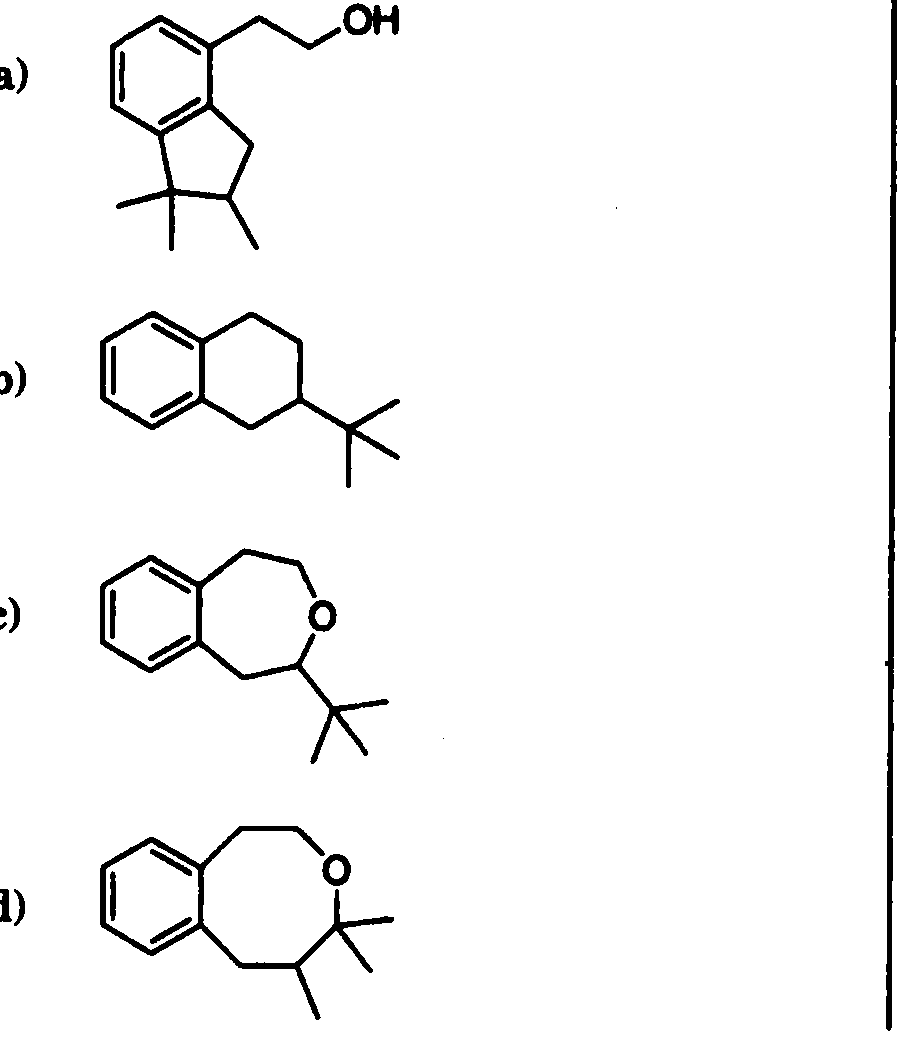
The major product formed in the following reaction is :

UPSC Combined Geo-Scientist Prelims 2025 Paper II (Chemistry), Q111: figure printed with the question
UPSC Combined Geo-Scientist Prelims 2025 Paper II (Chemistry), Q111: answer options as printed
  1. (a) 1,1,2-Trimethylindane bearing a 2-hydroxyethyl group at C4
  2. (b) 2-tert-Butyl-1,2,3,4-tetrahydronaphthalene
  3. (c) Seven-membered cyclic ether (tetrahydro-3-benzoxepine) with a tert-butyl group next to O
  4. (d) Eight-membered cyclic ether (benzoxocine) with gem-dimethyl next to O and a methyl on the adjacent carbon

Answer and explanation with the VKC plan

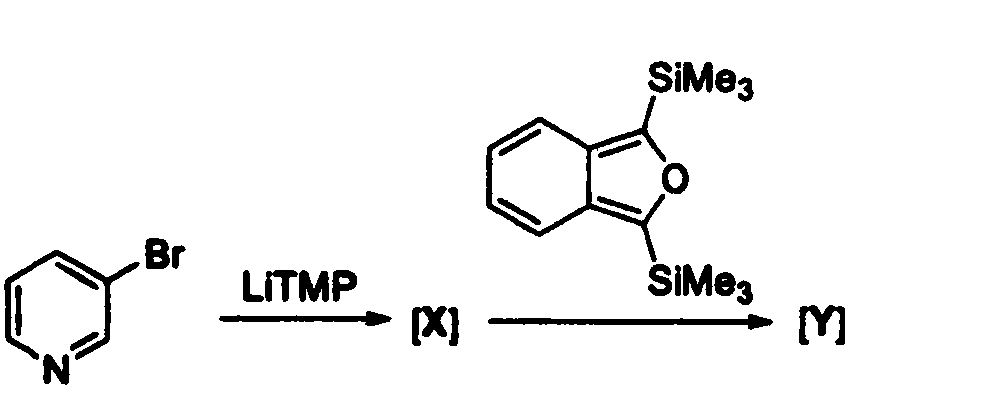
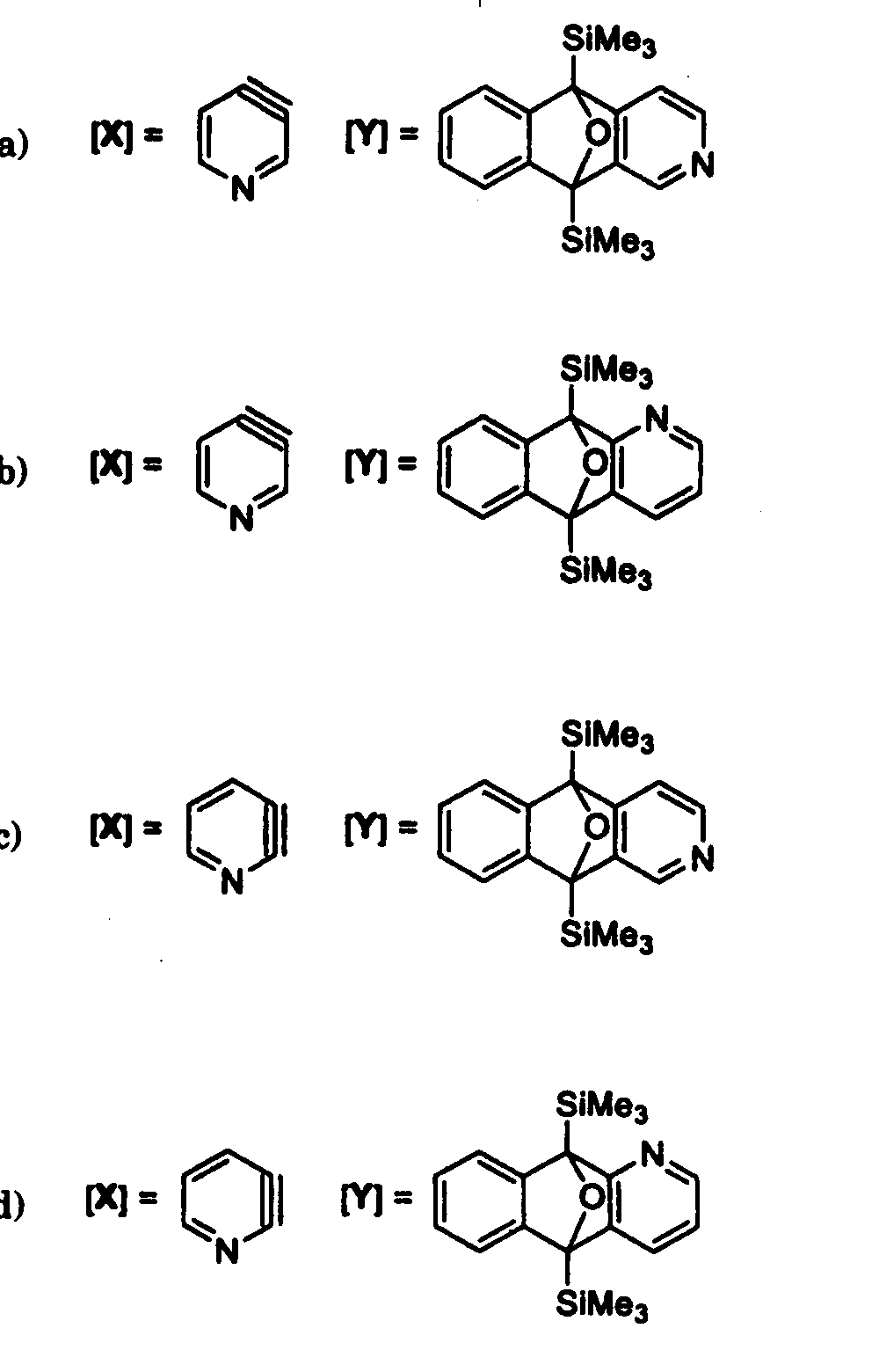
Q112Organic / hetarynes, Diels-Alder

The reactive intermediate and the major product formed in the following reaction is :
Lithium tetramethylpiperidide, LiTMP, is a strong non-nucleophilic base.

UPSC Combined Geo-Scientist Prelims 2025 Paper II (Chemistry), Q112: figure printed with the question
UPSC Combined Geo-Scientist Prelims 2025 Paper II (Chemistry), Q112: answer options as printed
  1. (a) [X] = 3,4-pyridyne; [Y] = 9,10-epoxy-bridged 2-azaanthracene adduct (N not adjacent to ring fusion), bis-SiMe₃
  2. (b) [X] = 3,4-pyridyne; [Y] = 9,10-epoxy-bridged 1-azaanthracene adduct (N adjacent to ring fusion), bis-SiMe₃
  3. (c) [X] = 2,3-pyridyne; [Y] = 9,10-epoxy-bridged 2-azaanthracene adduct (N not adjacent to ring fusion), bis-SiMe₃
  4. (d) [X] = 2,3-pyridyne; [Y] = 9,10-epoxy-bridged 1-azaanthracene adduct (N adjacent to ring fusion), bis-SiMe₃

Answer and explanation with the VKC plan

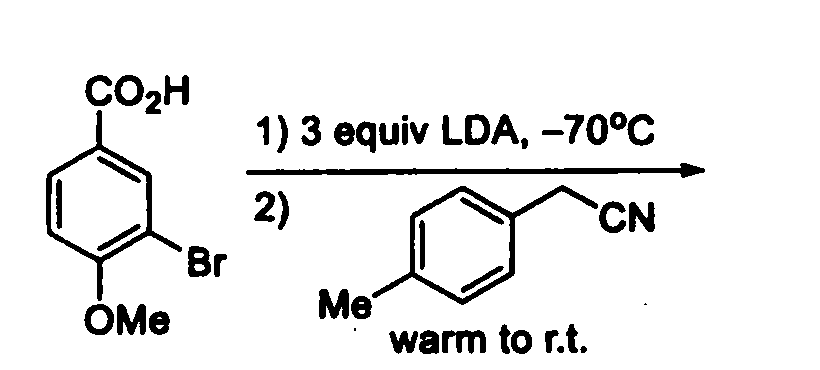
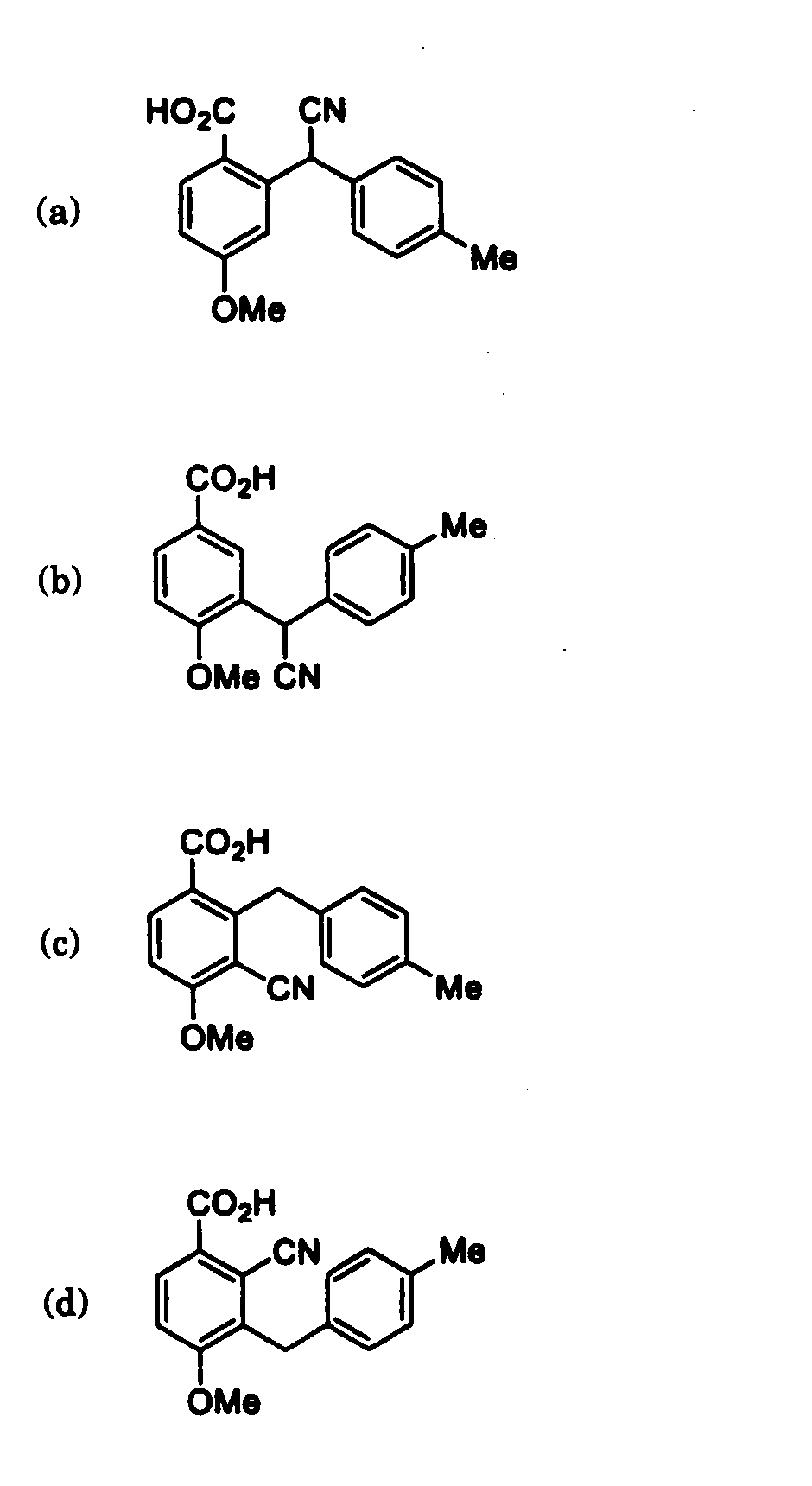
Q113Organic / benzyne, tandem addition-cyclisation

The major product formed in the following reaction is :

UPSC Combined Geo-Scientist Prelims 2025 Paper II (Chemistry), Q113: figure printed with the question
UPSC Combined Geo-Scientist Prelims 2025 Paper II (Chemistry), Q113: answer options as printed
  1. (a) 2-[Cyano(4-methylphenyl)methyl]-4-methoxybenzoic acid
  2. (b) 3-[Cyano(4-methylphenyl)methyl]-4-methoxybenzoic acid
  3. (c) 3-Cyano-4-methoxy-2-(4-methylbenzyl)benzoic acid
  4. (d) 2-Cyano-4-methoxy-3-(4-methylbenzyl)benzoic acid

Answer and explanation with the VKC plan

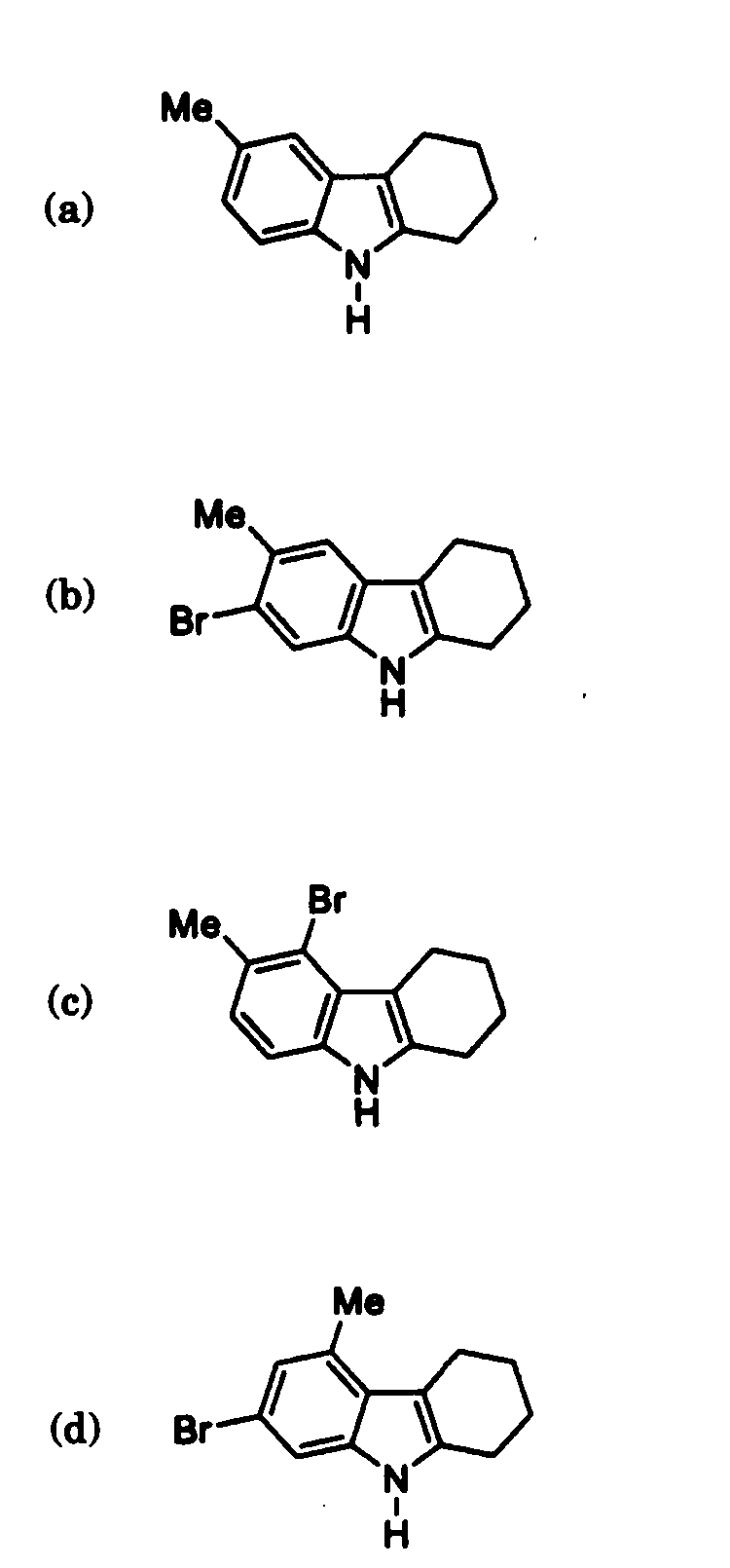
Q114Organic / aryne cyclisation (indole synthesis)

The major product [X] formed in the following reaction sequence is :

UPSC Combined Geo-Scientist Prelims 2025 Paper II (Chemistry), Q114: figure printed with the question
UPSC Combined Geo-Scientist Prelims 2025 Paper II (Chemistry), Q114: answer options as printed
  1. (a) 6-Methyl-2,3,4,9-tetrahydro-1H-carbazole
  2. (b) 7-Bromo-6-methyl-2,3,4,9-tetrahydro-1H-carbazole
  3. (c) 5-Bromo-6-methyl-2,3,4,9-tetrahydro-1H-carbazole
  4. (d) 7-Bromo-5-methyl-2,3,4,9-tetrahydro-1H-carbazole

Answer and explanation with the VKC plan

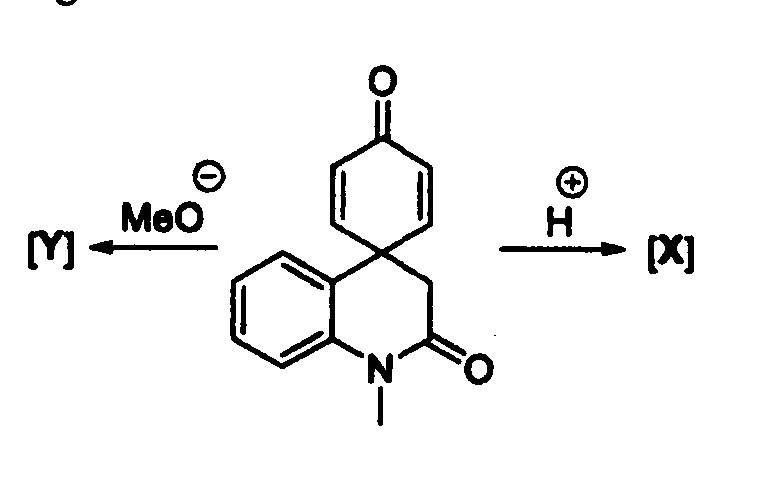
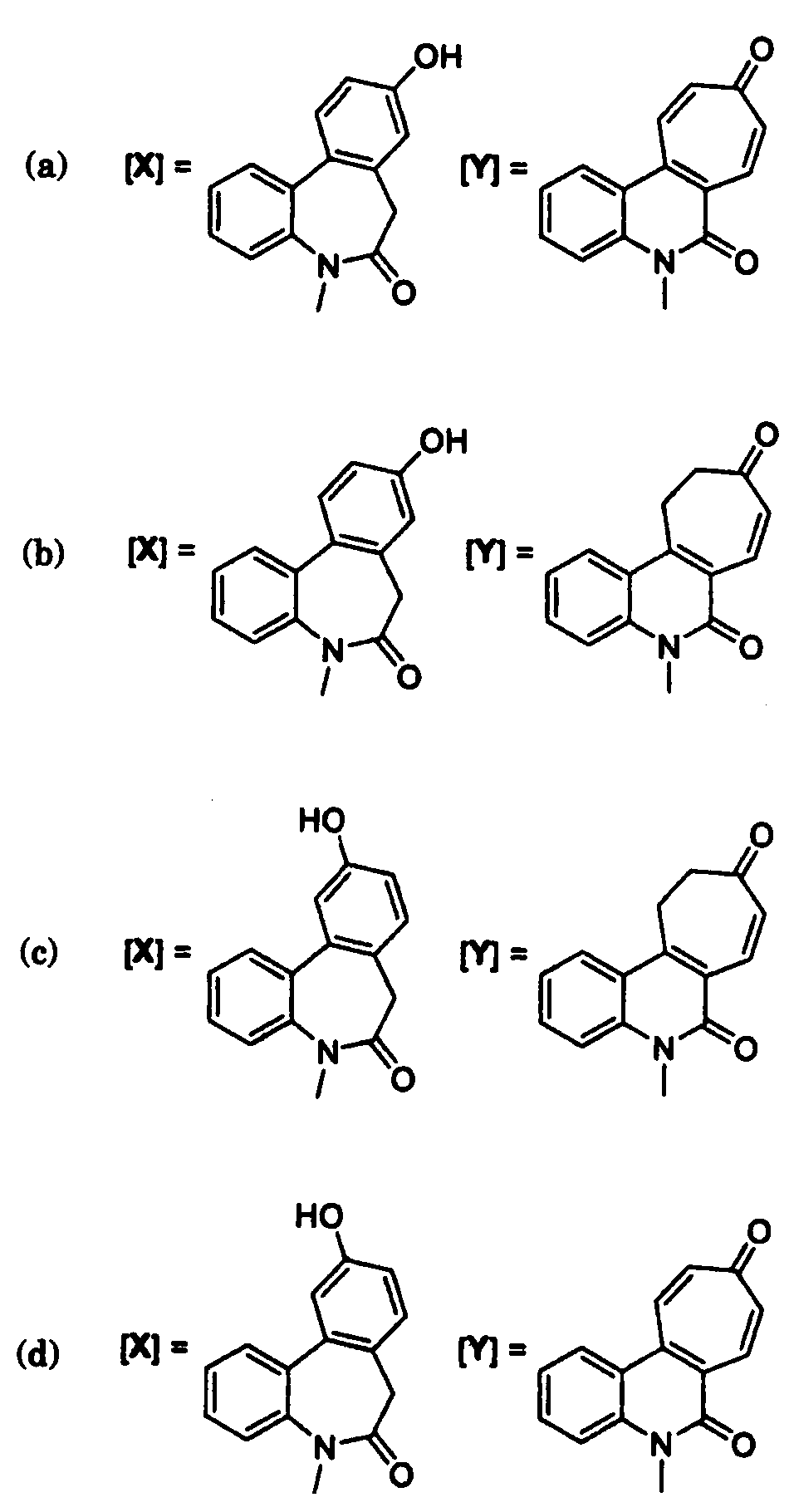
Q115Organic / dienone-phenol rearrangement, base-induced ring expansion

The major products [X] and [Y] formed in the following reactions are :

UPSC Combined Geo-Scientist Prelims 2025 Paper II (Chemistry), Q115: figure printed with the question
UPSC Combined Geo-Scientist Prelims 2025 Paper II (Chemistry), Q115: answer options as printed
  1. (a) [X] = dibenzazepinone phenol, OH para to the biaryl bond; [Y] = fully unsaturated tropone fused to N-methylphenanthridinone
  2. (b) [X] = dibenzazepinone phenol, OH para to the biaryl bond; [Y] = dihydrotropone (CH₂ in the seven-ring) fused to N-methylphenanthridinone
  3. (c) [X] = dibenzazepinone phenol, OH para to the CH₂ (meta to the biaryl bond); [Y] = dihydrotropone (CH₂ in the seven-ring) fused to N-methylphenanthridinone
  4. (d) [X] = dibenzazepinone phenol, OH para to the CH₂ (meta to the biaryl bond); [Y] = fully unsaturated tropone fused to N-methylphenanthridinone

Answer and explanation with the VKC plan

Q116Reaction mechanism / semipinacol rearrangement

The mechanism of the following reaction sequentially involves the :

UPSC Combined Geo-Scientist Prelims 2025 Paper II (Chemistry), Q116: figure printed with the question
  1. (a) conversion of 3° carbocation to oxocarbenium ion
  2. (b) conversion of 2° carbocation to oxocarbenium ion
  3. (c) conversion of 3° carbocation to 1° carbocation
  4. (d) conversion of 2° carbocation to 1° carbocation

Answer and explanation with the VKC plan

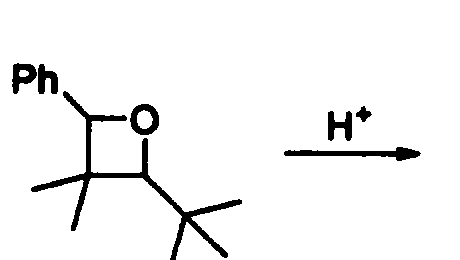
Q117Organic / oxetane ring opening, methyl shift

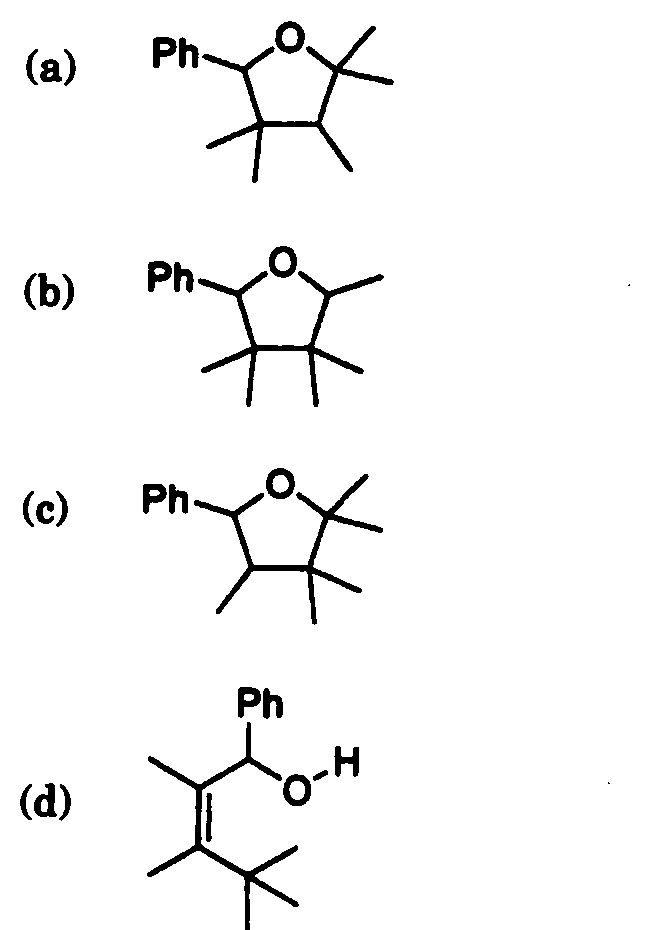
The major product formed in the following reaction is :

UPSC Combined Geo-Scientist Prelims 2025 Paper II (Chemistry), Q117: figure printed with the question
UPSC Combined Geo-Scientist Prelims 2025 Paper II (Chemistry), Q117: answer options as printed
  1. (a) 2-Phenyl-3,3,4,5,5-pentamethyltetrahydrofuran
  2. (b) 2-Phenyl-3,3,4,4,5-pentamethyltetrahydrofuran
  3. (c) 2-Phenyl-3,4,4,5,5-pentamethyltetrahydrofuran
  4. (d) 2,3,4,4-Tetramethyl-1-phenylpent-2-en-1-ol

Answer and explanation with the VKC plan

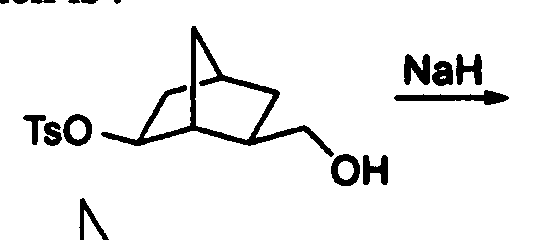
Q118Organic / homo-Grob fragmentation

The major product formed in the following reaction is :

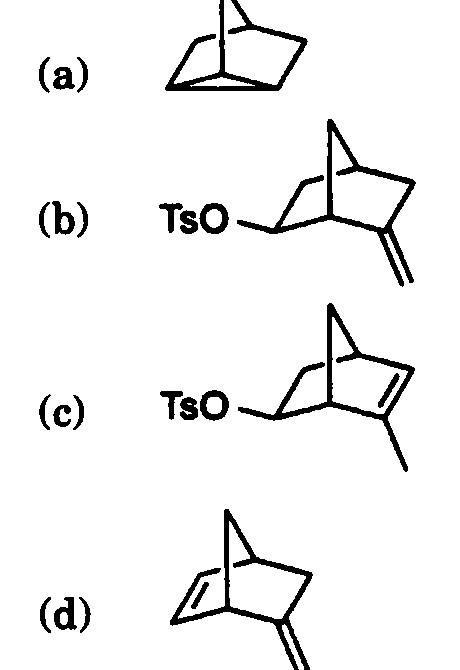
UPSC Combined Geo-Scientist Prelims 2025 Paper II (Chemistry), Q118: figure printed with the question
UPSC Combined Geo-Scientist Prelims 2025 Paper II (Chemistry), Q118: answer options as printed
  1. (a) Nortricyclene (tricyclo[2.2.1.0²,⁶]heptane)
  2. (b) 5-Methylidenebicyclo[2.2.1]heptan-2-yl tosylate
  3. (c) 6-Methylbicyclo[2.2.1]hept-5-en-2-yl tosylate
  4. (d) 5-Methylidenebicyclo[2.2.1]hept-2-ene

Answer and explanation with the VKC plan

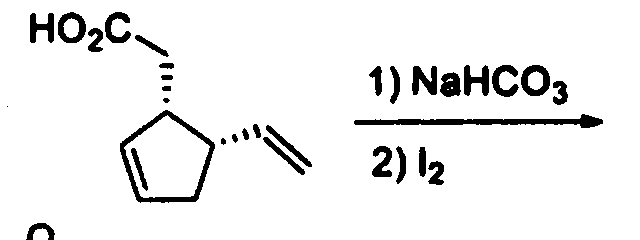
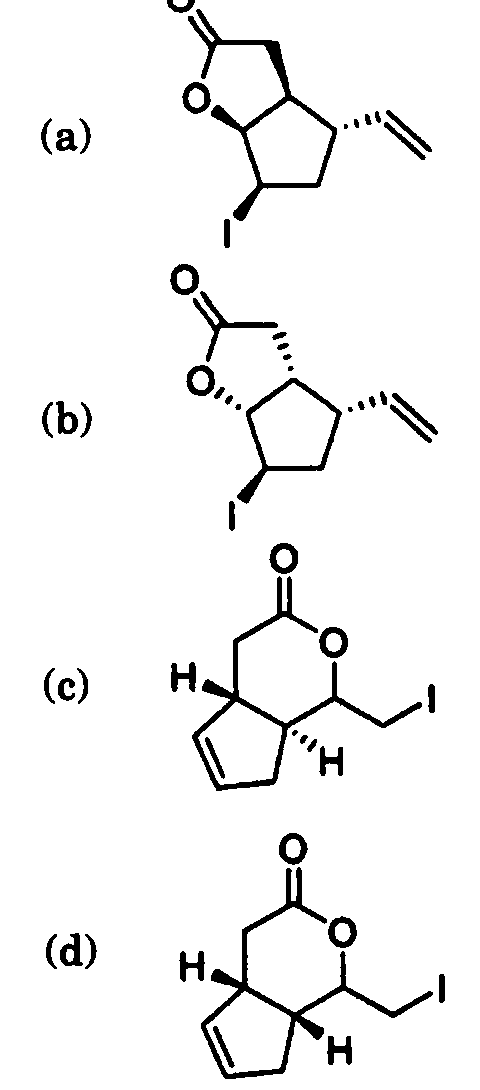
Q119Organic / iodolactonisation, stereochemistry

The major product formed in the following reaction sequence is :

UPSC Combined Geo-Scientist Prelims 2025 Paper II (Chemistry), Q119: figure printed with the question
UPSC Combined Geo-Scientist Prelims 2025 Paper II (Chemistry), Q119: answer options as printed
  1. (a) cis-Fused γ-lactone: CH₂ and O wedged, I wedged, vinyl hashed
  2. (b) cis-Fused γ-lactone: CH₂ and O hashed, I wedged, vinyl hashed
  3. (c) δ-Lactone with CH₂I (from the vinyl group), ring alkene retained, trans ring fusion
  4. (d) δ-Lactone with CH₂I (from the vinyl group), ring alkene retained, cis ring fusion

Answer and explanation with the VKC plan

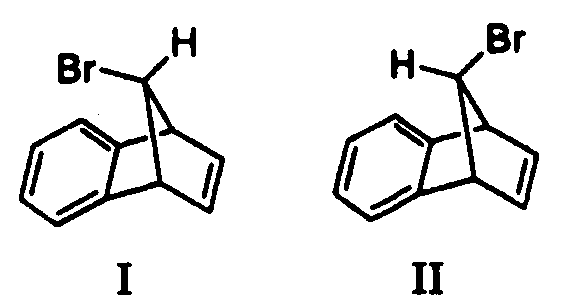
Q120Reaction mechanism / neighbouring-group (π) participation

Consider the following statements regarding the solvolysis of compounds I and II in acetic acid :
Statement 1 : Compound I undergo solvolysis faster than compound II.
Statement 2 : The greater rate enhancement in compound I than II is due to the effective stabilization of transition state by the isolated double bond than an aryl ring.

UPSC Combined Geo-Scientist Prelims 2025 Paper II (Chemistry), Q120: figure printed with the question

Which one of the following is correct in respect of above statements ?

  1. (a) Both statement 1 and statement 2 are true and statement 2 is the correct explanation of statement 1.
  2. (b) Both statement 1 and statement 2 are true but statement 2 is not the correct explanation of statement 1.
  3. (c) Statement 1 is true but statement 2 is false.
  4. (d) Statement 1 is false but statement 2 is true.

Answer and explanation with the VKC plan

Take this paper offlineAll 120 questions with answers and explanations in one PDF.
Download PDFJoin Telegram